
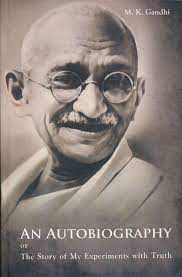
Original Title
The Story of My Experiments With Truth
Subject & College
Publish Date
2022-01-01
Published Year
2022
Publisher, Place
Navajivan Publishing House
Total Pages
469
ISBN 13
9788172290085
Format
Hardcover
Country
India
Language
English
Translator
Desai Mahadev
Readers Feedback
The Story of My Life
Burhade Shravani,IVB.Arch.D,STES'S Sinhgad College of Architecture,Pune-41 Autobiography, published in 1903. This inspiring book offers a firsthand account of Keller's life as a deaf-blind woman and...Read More

Burhade Shravani
The Story of My Life
Burhade Shravani,IVB.Arch.D,STES’S Sinhgad College of Architecture,Pune-41
Autobiography, published in 1903. This inspiring book offers a firsthand account of Keller’s life as a deaf-blind woman and her journey toward self-expression and academic success. Written during the early 20th century, the book highlights societal views on disability and education during that time
Plot Overview: Helen Keller recounts her life, focusing on her early struggles with communication after losing her sight and hearing at a young age. She narrates how her teacher, Anne Sullivan, transformed her world by introducing her to language, leading her to pursue a remarkable academic and personal life.
Themes: The book explores themes of perseverance, education as a means of empowerment, human connection, and overcoming societal and personal limitations.
Setting: The story takes place primarily in Tuscumbia, Alabama, where Keller grew up, as well as at Radcliffe College. The settings illustrate her journey from isolation to academic success.
Characters/Subject:
• Helen Keller: The protagonist, who grows from a frustrated child into an empowered and educated individual.
• Anne Sullivan: Helen’s teacher and mentor, whose innovative methods and patience were instrumental in her success.
• The Keller Family: Helen’s parents and siblings play supporting roles in her journey.
Writing Style: Keller writes with poetic eloquence and vivid imagery, capturing the world through her remaining senses. Her descriptions are heartfelt and introspective, drawing readers into her unique perspective.
Character/Subject Development: Helen’s evolution from despair to success is profoundly moving. The depth of her relationship with Anne Sullivan is beautifully portrayed, and both women are depicted as fully realized individuals
Plot Structure/Practical Applications: The autobiography is chronological and
straightforward, detailing key milestones in Keller’s life. Its inspiring message is applicable to education, disability advocacy, and personal resilience.
Themes and Messages: Keller conveys her themes effectively, emphasizing the importance of determination, support systems, and the power of education in overcoming challenges.
Emotional Impact: The book evokes admiration, empathy, and hope. Helen’s candid narrative and vivid recollections make it an emotionally powerful read.
II. Strengths & Weaknesses
Strengths:
• Helen Keller’s inspiring story and the bond with Anne Sullivan are beautifully narrated.
• The writing style is engaging and eloquent, capturing Keller’s perspective uniquely.
• The book provides an authentic look at the challenges faced by individuals with disabilities during the early 20th century.
Weaknesses:
• It focuses predominantly on Helen’s early life, leaving less detail about her later achievements.
• Some passages, due to the era of publication, may feel formal or dated to modern readers.
Personal Reflection
Connection: I found Helen Keller’s perseverance deeply inspiring. Her story resonates universally with anyone facing adversity.
Relevance: The book highlights the importance of inclusive education and advocacy, themes that remain highly relevant in contemporary discussions on disability rights
Recommendation: I highly recommend this book to readers of all ages, particularly those interested in autobiographies, inspirational stories, or themes of education and disability rights.
Final Thoughts: The Story of My Life is a timeless account of human courage and determination. Helen Keller’s life is a beacon of hope, teaching readers that with the right support and persistence, even the most daunting obstacles can be overcome.
Burhade Shravani
A Testament to courage : Reviewing My Experiments with Truth
"My Experiments with Truth" is a thought-provoking and inspiring memoir that offers a unique glimpse into the life and mind of one of the 20th...Read More

Gujar Vaishnavi Dattatraya
A Testament to courage : Reviewing My Experiments with Truth
“My Experiments with Truth” is a thought-provoking and inspiring memoir that offers a unique glimpse into the life and mind of one of the 20th century’s most influential leaders. It’s a must-read for anyone interested in Gandhi’s life, philosophy, and legacy. The book is written in a simple and accessible style, making it easy to read and understand. Gandhi’s writing is characterized by his humility, honesty, and sense of humor. The book is structured chronologically, with each part building on the previous one to create a narrative arc .The book is a collection of weekly writings published in Gandhi’s journal Navjivan from 1925 to 1929. The narrative is candid, reflective, and engaging, making it a compelling read. Gandhi’s writing style is simple, yet powerful, conveying his thoughts and experiences in a way that resonates with readers. The book provides valuable insights into India’s struggle for independence and Gandhi’s role in it. It also sheds light on the experiences of Indians in South Africa during the early 20th century, highlighting the discrimination and racism they faced. Gandhi’s interactions with other prominent leaders of the time, such as Gopal Krishna Gokhale, are also documented. Gandhi’s experiments with truth are deeply rooted in his philosophical beliefs. He explores concepts like non-violence, self-denial, and simplicity, demonstrating how these principles guided his actions and decisions. The book also delves into Gandhi’s spiritual journey, including his influences, such as Leo Tolstoy and the Bhagavad Gita. The autobiography offers a glimpse into Gandhi’s personal life, including his childhood, marriage, and relationships. His struggles with his own morality and spirituality are candidly shared, making him a relatable and human figure. Gandhi’s self-awareness and willingness to confront his own flaws are admirable and inspiring. The book highlights the cultural differences between India and South Africa, as well as the tensions between various ethnic groups in South Africa. Gandhi’s experiences with Indian culture, particularly his adoption of traditional Indian dress and habits, are also explored. Overall, “My Experiments with Truth” is a rich and multifaceted book that offers insights into Gandhi’s life, philosophy, and historical context. It is a must-read for anyone interested in Gandhi, Indian history, or philosophy. “My Experiments with Truth” has had a significant impact on modern Indian history and the global peace movement. The book has inspired countless individuals, including Martin Luther King Jr., Nelson Mandela, and Aung San Suu Kyi, to adopt non-violent resistance as a means of achieving social change. The book continues to be widely read and studied today, offering insights into Gandhi’s philosophy and methodology. “My Experiments with Truth” is not just for history enthusiasts or those interested in politics. It offers valuable lessons in self-discipline, introspection, and spiritual growth. It serves as a reminder of the importance of living a life of integrity and the constant pursuit of personal and collective truth. “My Experiments with Truth” is a profoundly inspiring and insightful autobiography that offers a glimpse into the life and thought of Mahatma Gandhi. Through his experiments with truth, non-violence, and simple living, Gandhi developed a philosophy of life that continues to inspire and guide individuals and movements around the world. The book concludes with Gandhi’s reflection on his life’s work, acknowledging that his experiments with truth are ongoing and that he is still learning and growing. He expresses his hope that his story will inspire others to embark on their own experiments with truth and to work towards creating a more just and peaceful world. Ultimately, “My Experiments with Truth” is a testament to the power of courage, conviction, and compassion, and a reminder that even small actions can have a profound impact when guided by a commitment to truth and non-violence.