
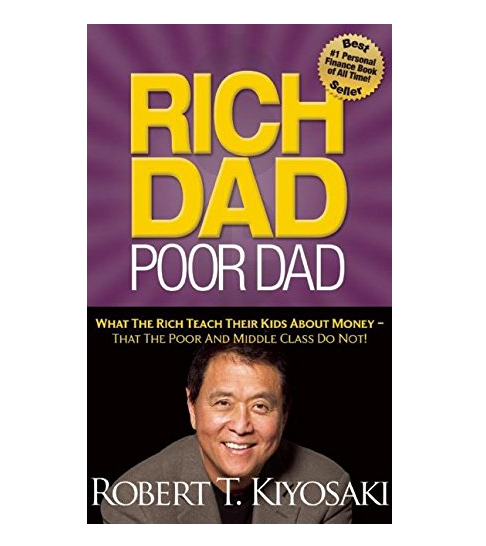
Original Title
Rich Dad Poor Dad
Subject & College
Publisher, Place
Plata Publishing
Total Pages
274
Format
paper
Country
India
Language
English
Readers Feedback
Rich Dad Poor Dad
Name of Reviewer - Shital Sandip Sankare, Third Year B.Sc.B.Ed, Ashoka College of Education, Nashik. As a student, I've read numerous books on personal finance...Read More

Shital Sandip Sankare
Rich Dad Poor Dad
Name of Reviewer – Shital Sandip Sankare, Third Year B.Sc.B.Ed, Ashoka College of Education, Nashik.
As a student, I’ve read numerous books on personal finance and wealth creation, but none have had a more profound impact on my mindset and behavior than “Rich Dad Poor Dad” by Robert Kiyosaki. This book has been a game-changer for me, and I’m excited to share my thoughts on why it’s a must-read for anyone looking to take control of their financial future.
1) Challenging Conventional Wisdom
From the outset, Kiyosaki challenges the conventional wisdom that has been drummed into us since childhood: “Go to school, get good grades, and get a secure job.” He argues that this approach is flawed and that it’s essential to think differently about money and wealth creation. Through his personal story, Kiyosaki illustrates how his “rich dad” (his friend’s father) taught him valuable lessons about financial independence, while his “poor dad” (his own father) represented the conventional views on money.
2) Key Takeaways
One of the most significant takeaways from the book is the importance of financial education. Kiyosaki emphasizes that financial literacy is crucial for achieving financial freedom. He argues that we should focus on acquiring assets, not liabilities, and that we should strive to build multiple streams of income.
Another critical concept that resonated with me is the idea of “paying yourself first.” Kiyosaki advocates for setting aside a portion of your income for investments and savings before paying taxes or bills. This approach requires discipline and patience, but it’s a powerful way to build wealth over time.
3) A New Perspective on Money
Reading “Rich Dad Poor Dad” has given me a new perspective on money and wealth creation. I’ve come to realize that money is not just a means of exchange, but a tool for achieving financial freedom. Kiyosaki’s emphasis on building assets, reducing liabilities, and creating multiple streams of income has inspired me to rethink my financial goals and strategies.
4) Practical Advice and Real-World Examples
What I appreciate most about “Rich Dad Poor Dad” is the practical advice and real-world examples that Kiyosaki provides. He shares his own experiences, successes, and failures, making the book feel more like a conversation with a mentor than a dry financial textbook. The book is filled with actionable tips and strategies that readers can apply to their own lives.
5) Criticisms and Limitations
While “Rich Dad Poor Dad” has been a life-changing read for me, I do acknowledge some criticisms and limitations. Some readers have argued that Kiyosaki’s approach is overly simplistic or that his emphasis on real estate investing is not relevant to everyone. Additionally, some critics have pointed out that Kiyosaki’s views on taxes and accounting are not always accurate or up-to-date.
Conclusion
“Rich Dad Poor Dad” is a must-read for anyone looking to take control of their financial future. Kiyosaki’s book offers a unique perspective on money and wealth creation, challenging readers to think differently about their financial goals and strategies. While the book may have its limitations and criticisms, the practical advice and real-world examples make it a valuable resource for anyone looking to achieve financial freedom.
As a student, I’ve found “Rich Dad Poor Dad” to be a life-changing read that has inspired me to rethink my financial goals and strategies. I highly recommend this book to anyone looking to take control of their financial future and achieve financial freedom.
Shital Sandip Sankare
Rich Dad Poor Dad
About the Author Robert Kiyosaki is an entrepreneur, investor, and motivational speaker known for his expertise in personal finance and wealth-building. Through his books and...Read More

Potghan Gauri Karbhari
Rich Dad Poor Dad
About the Author
Robert Kiyosaki is an entrepreneur, investor, and motivational speaker
known for his expertise in personal finance and wealth-building.
Through his books and seminars, he has educated millions worldwide on
financial literacy and the importance of entrepreneurship.
About the Book
Rich Dad Poor Dad is a personal finance classic that challenges
conventional views on money, work, and wealth creation. Kiyosaki
contrasts the financial philosophies of two influential figures in his
life—his biological father ("Poor Dad") and the father of his best friend
("Rich Dad").
About the Plot
The book narrates lessons learned from two contrasting approaches to
money management. "Poor Dad" emphasizes traditional education and
job security, while "Rich Dad" advocates financial independence through
investments, entrepreneurship, and understanding money as a tool.
Kiyosaki uses anecdotes and practical advice to highlight the differences
in mindset that determine financial success.
About the Characterisation.
The "Rich Dad" and "Poor Dad" figures symbolize two distinct
worldviews. "Poor Dad" represents the conventional approach of
working for money, while "Rich Dad" embodies a progressive mindset of
making money work for you. Kiyosaki’s narrative captures the wisdom
and flaws of both, making the concepts relatable.
About the Themes
Key themes include financial education, the difference between assets
and liabilities, the importance of passive income, and breaking free from
the "rat race." The book emphasizes mindset shifts necessary for building
wealth and highlights the need for continuous learning and calculated
risk-taking.
About Overall Analysis
Rich Dad Poor Dad is an eye-opening guide for readers new to financial
literacy. Its conversational tone and relatable examples make it
accessible, while its focus on mindset over technical jargon sets it apart.
However, the advice often lacks specificity, which might require
supplemental resources for practical application.
Your Opinion
I found Rich Dad Poor Dad to be highly inspiring, particularly in its
emphasis on thinking differently about money. The lessons on assets,
liabilities, and financial independence are transformative for anyone
seeking long-term financial security.
Compare with Similar Works
Compared to books like The Intelligent Investor by Benjamin Graham,
which delves into investment strategies, Rich Dad Poor Dad focuses
more on mindset and foundational financial principles. While Graham’s
work is for advanced readers, Kiyosaki’s is suitable for beginners.
Appreciation/Critique
The book deserves appreciation for its simplicity and motivational tone.
However, some of its advice, such as encouraging entrepreneurship
without delving into potential risks, may seem overly idealistic.
Additionally, critics argue that it sometimes oversimplifies financial
challenges.
Potghan Gauri Karbhari
Rich Dad Poor Dad
Ms. Laveena Vishal Notwani, FY BBA, Ashoka Center for Business and Computer Studies, Nashik. Rich Dad Poor Dad is a personal finance book written by...Read More

Laveena Vishal Notwani
Rich Dad Poor Dad
Ms. Laveena Vishal Notwani, FY BBA, Ashoka Center for Business and Computer Studies, Nashik.
Rich Dad Poor Dad is a personal finance book written by Robert Kiyosaki. The book is an autobiographical account of Kiyosaki’s childhood, where he had two fathers: his own “poor dad,” who was a well-educated but financially struggling government worker, and his best friend’s “rich dad,” who was a successful businessman and investor. Through his experiences with both fathers, Kiyosaki learned valuable lessons about money, wealth, and financial independence. The book challenges conventional wisdom about money and wealth, and offers practical advice on investing, building wealth, and achieving financial freedom.
Analysis of the Book:
Rich Dad Poor Dad is a thought-provoking book that challenges readers to rethink their approach to money and wealth. Kiyosaki’s writing style is engaging, and his use of personal anecdotes makes the book relatable and easy to understand. The book’s central theme – that financial education is more important than traditional education – is well-argued and supported by Kiyosaki’s own experiences. However, some critics have argued that the book’s advice is overly simplistic or unrealistic, and that Kiyosaki’s emphasis on real estate investing may not be suitable for all readers.
My Opinion about the Book:
I found Rich Dad Poor Dad to be a inspiring and informative book that offers valuable insights into the world of personal finance. Kiyosaki’s writing style is engaging, and his use of personal anecdotes makes the book relatable and easy to understand. While some of the book’s advice may be overly simplistic or unrealistic, I believe that the book’s central theme – that financial education is key to achieving financial freedom – is well-argued and supported by Kiyosaki’s own experiences.
Why I Recommend Others for Reading:
I highly recommend Rich Dad Poor Dad to anyone looking to improve their financial literacy and achieve financial freedom. The book offers practical advice on investing, building wealth, and managing finances, and challenges readers to rethink their approach to money and wealth. Whether you’re a seasoned investor or just starting out, Rich Dad Poor Dad is a must-read for anyone looking to take control of their financial future.
Laveena Vishal Notwani
Rich Dad Poor Dad
Kokni Mohammed Sadique Aalamgir, FY BBA(CA), Ashoka Center for Business and Computer Studies, Nashik. Rich Dad Poor Dad is a one of the best...Read More

Kokni Mohammed Sadique Aalamgir
Rich Dad Poor Dad
Kokni Mohammed Sadique Aalamgir, FY BBA(CA), Ashoka Center for Business and Computer Studies, Nashik.
Rich Dad Poor Dad is a one of the best personal finance book that explores the financial philosophies of two father figures in Robert Kiyosaki’s life—his biological father, referred to as “Poor Dad,” and his friend’s father, dubbed “Rich Dad.” Through anecdotes and lessons learned from these two men, Robert Kiyosaki demonstrates how conventional wisdom about money, education, and career often fails to create wealth. The book advocates for financial literacy, investing, entrepreneurship, and understanding how money works. Its core message centers on breaking free from the traditional “rat race” and cultivating assets that generate passive income. Robert Kiyosaki provides real-life examples and practical advice on achieving financial independence.
Analysis of the Book:
Robert Kiyosaki’s writing style is simple yet immersive, making complex financial concepts accessible to readers of all backgrounds. The book challenges traditional beliefs about education and employment, emphasizing that wealth is built through smart investments, asset acquisition, and leveraging opportunities rather than relying solely on a steady job and savings. The use of the two fathers as contrasting figures adds a compelling narrative element, which makes the book both educational and engaging. However the trait of the book can be that the book lacks detailed step-by-step strategies, leaning heavily on broad principles and motivational rhetoric. Even so, the lessons on cash flow, assets vs. liabilities, and the importance of financial education remain timeless and impactful.
My Opinion About the Book:
Rich Dad Poor Dad is a must-read for anyone seeking a dramatic change in how they think about money. While some of the advice may seem idealistic or simplified, the book excels in sparking curiosity and encouraging readers to take control of their financial future. Robert Kiyosaki’s emphasis on self-education and developing financial intelligence is especially relevant in today’s rapidly changing economic landscape. The real strength of the book lies in its ability to inspire action and make readers question their current financial habits and beliefs.
Why you should Read this Book:
This book is not just for entrepreneurs or investors—it’s for anyone who wants to understand the basics of wealth creation and financial freedom. It provides a foundation for individuals who feel stuck in the cycle of earning and spending, offering them the mindset and motivation to build a better financial future. Whether you’re a beginner in financial literacy or someone looking to refine your money management skills, Rich Dad Poor Dad offers valuable insights and timeless principles.
Rating:
I would rate this book a 5/5 for not only teaching how the money works, but also providing a roadmap. Other factors being easy to understand language and availability of the book (in terms of price and popularity). It remains an essential read for anyone aspiring to improve their financial knowledge and take charge of their destiny.
Kokni Mohammed Sadique Aalamgir
Rich Dad Poor Dad
Mrs Sujata Ananda Bansode, Asst.Librarian , Sinhgad College of Science,Pune OVERVIEW Rich Dad Poor Dad is a personal finance classic that challenges conventional wisdom about...Read More

Mrs Sujata Ananda Bansode
Rich Dad Poor Dad
Mrs Sujata Ananda Bansode, Asst.Librarian , Sinhgad College of Science,Pune
OVERVIEW
Rich Dad Poor Dad is a personal finance classic that challenges conventional wisdom about money,work,and wealth-building.The book narrates lessons learned from two father figures in Robert Kiyosaki’s life:his “poor dad”
( his biological father) and his “rich dad”(the father of his best friend).These contrasting perspectives form the foundation of the book’s teachings.
KEY LESSONS
1. THE IMPORTANCE OF FINANCIAL EDUCATION :- Kiyosaki emphysizes that traditional schooling focuses on academic knowledge but neglects financial literacy.He argues that understanding how money works is crucial to achieving financial independence.
2. ASSETS vs. LIABILITIES :- One of the book’s central ideas is distinguishing between assets and liabilities . Kiyosaki defines an asset as something that puts money in your pocket and a liability as something that takes money out. This distinction forms the basis for smarter financial decisions.
3. WORK TO LEARN,NOT JUST TO EARN :- Rather than working solely for a paycheck, kiyosaki advises readers to focus on acquiring skills that can lead to wealth creation, such as investing ,entrepreneurship,and managing finances.
4. THE POWER OF PASSIVE INCOME :- Building streams of passive income through investments ,businesses,or real estate is presented as the key to financial freedom.
5. OVERCOMING FEAR AND MINDSET BARRIERS :- Kiyosaki stresses the importance of a positive mindset about money,overcoming fear of failure,and being willing to take calculated risks.
STRENGTH
* ACCESSIBLE WRITING STYLE :- The book simplifies complex financial concepts,making them easy to understand for beginners.
* MOTIVATIONAL TONE :- Its anecdotes and principles inspire readers to take control of their financial future.
* ACTIONABLE ADVICE :- The emphyasis on acquiring assets and learning about money management offers practical steps toward financial freedom.
WEAKNESS
*The book focuses heavily on mindset and philosophy but often lacks actionable,step by step strategies for achieving financial independence.
*Some readers feel the book serves as a gateway to promote kiyosaki’s seminars,courses,and other products rather than standing alone as a comprehensive guide.
*The book tends to dismiss traditional jobs and higher education as limiting, which may not align with everyone’s goals or circumstances.
CRITICISM
* OVERSIMPLIFIED CONCEPTS :- Critics argue that the book glosses over the complexities of personal finance and investing.
* LACK OF CONCRETE EXAMPLES :- Some find the advice too theoretical,with limited actionable strategies.
* CONTROVERSIAL CLAIMS :- Kiyosaki’s methods and views on debt and entrepreneurship may not align with everyone’s financial situation or risk tolerance.
PERSONAL REFLECTION
* “Workers work hard enough to not be fired,and owners pay just enough so that workers won’t quit”.
* ” I would rather welcome change than cling to the past”.
* Reading Rich Dad Poor Dad sparked a desire to take control of my financial future and prioritize financial education.
* Overall ,Rich Dad Poor Dad was a motivating and thought – provoking read, but I have supplemented it with other resources for a more balanced and practical approach to financial growth.
* CONCLUSION
Rich Dad Poor Dad is a thought-provoking book that serves as a great starting point for those new to personal finance . While it has its limitations,its core message about financial independence and the importance of financial literacy resonates with readers worldwide. It’s an excellent motivator for anyone looking to rethink their approach to money and wealth – building.
Mrs Sujata Ananda Bansode
Rich Dad Poor Dad
Student Name-Yashodeep Gaikwad College Name-Sinhgad College Of Engineering Vadgaon(bk) “Rich Dad Poor Dad” by Robert T. Kiyosaki is a personal finance book that contrasts the...Read More

Yashodeep Gaikwad
Rich Dad Poor Dad
Student Name-Yashodeep Gaikwad
College Name-Sinhgad College Of Engineering Vadgaon(bk)
“Rich Dad Poor Dad” by Robert T. Kiyosaki is a personal finance book that contrasts the financial philosophies of two influential figures in the author’s life—his biological father (whom he calls his “Poor Dad”) and the father of his best friend (his “Rich Dad”). Through this dual perspective, Kiyosaki explores the fundamental principles that separate the wealthy from the middle and lower classes, providing readers with a unique approach to financial education.
The book Is divided into multiple lessons, each offering insights into how to think about money, assets, and liabilities. Kiyosaki’s core argument is that formal education often leaves people ill-prepared for managing their finances, and that financial success requires a different mindset—one that prioritizes financial literacy, risk-taking, and investment. His “Rich Dad” offers practical advice on building wealth, stressing the importance of acquiring income-generating assets and understanding the nature of money.
One of the key takeaways from the book is the distinction between assets and liabilities. According to Kiyosaki, the wealthy focus on acquiring assets—things that put money in your pocket, such as real estate, stocks, and businesses—while liabilities, such as debt and consumer spending, drain wealth. This distinction forms the foundation for Kiyosaki’s approach to wealth-building, urging readers to shift their mindset from working for a paycheck to creating passive income streams.
Another critical concept is the importance of financial education. “Poor Dad” follows the traditional route of working hard for a steady paycheck and relying on job security, whereas “Rich Dad” advocates for continuously learning about money and taking calculated risks in order to grow wealth. Kiyosaki emphasizes that understanding how money works, as opposed to simply earning it, is the key to financial freedom.
The book also discusses entrepreneurship and the value of starting businesses. Kiyosaki argues that entrepreneurship is one of the most effective ways to create wealth, and that the ability to innovate and take risks is central to success in today’s economy. He highlights the importance of learning to leverage other people’s time and money, stressing that financial independence is achievable through entrepreneurship and investments rather than traditional employment.
However, “Rich Dad Poor Dad” has faced criticism for its lack of concrete financial strategies and its emphasis on broad principles rather than actionable steps. Critics argue that Kiyosaki’s suggestions may not be feasible for everyone, especially those without initial capital to invest or entrepreneurial ambitions. Additionally, some readers find the book’s tone overly simplistic, as it does not address the complexities of personal finance or the risks involved in some of the strategies Kiyosaki promotes.
Despite these criticisms, “Rich Dad Poor Dad” remains a highly influential book in the personal finance genre. It challenges traditional views about money and provides a fresh perspective on wealth-building. Kiyosaki’s message—encouraging financial education, asset acquisition, and entrepreneurial thinking—resonates with readers looking for ways to break free from the cycle of living paycheck to paycheck. Whether one agrees with all of Kiyosaki’s views or not, the book serves as an eye-opening introduction to the importance of financial independence and self-directed wealth creation.
Yashodeep Gaikwad
provoking book that challenges conventional wisdom about money
Ku.Varape Sneha Santosh, T.Y.B.A. Dept. of English, Annasaheb Awate Colllege Manachar "Rich Dad Poor Dad" by Robert Kiyosaki is a thought-provoking book that challenges conventional...Read More

Ku.Varape Sneha Santosh
provoking book that challenges conventional wisdom about money
Ku.Varape Sneha Santosh, T.Y.B.A. Dept. of English, Annasaheb Awate Colllege Manachar
“Rich Dad Poor Dad” by Robert Kiyosaki is a thought-provoking book that challenges conventional wisdom about money, wealth and financial independence. First published in 1997, the book has become a classic in the personal finance space inspiring millions of readers worldwide. Through his personal story, Kiyosaki shares the lessons he learned from his two fathers: his own “poor dad,” who was a well-educated but financially struggling government worker, and his best friends. “rich dad” who was a high school dropout but a successful businessman.
Kiyosaki’s book emphasizes the importance of financial education, highlighting the need for individuals to understand basic financial concepts, suchascash flow, assets, and liabilities. He argues that financial literacy is essential for achieving financial independence and building wealth. Kiyosaki, also encourages readers to adopt a regarding money, wealth, and work. He argues that people should focus on their building assets, rather than solely relying on their income. This mindset shift is critical in achieving financial freedom and creating a secure financial future.
Throughout the book, Kiyosaki provides actionable advice on investing real estate, and entrepreneurship. He stresses the importance of taking calculated risks and learning from failures kiyosakis approach to financial education is practical and accessible making the book an excellent resource for readers of all ages and financial backgrounds. The books principles and concepts remain relevant today, offering valuable insights for individuals seeking financial independence. Kiyosaki’s ideas have also been influential in shaping the financial literacy movement inspiring a new generation of investors and entrepreneurs.
While Rich Dad poor Dad has been widely praised for its thought provoking ideas and practical advice some critics have argued that Kiyosaki’s approach is overly simplistic or that his investment strategies are too aggressive. However the books core message about the importance of financial education and independence remains a valuable and timeless lesson. Toconclude, Rich Dad Poor Dad is an excellent resource for anyone looking to improve their financial literacy, challenge conventional wisdom and adopt a more proactive approach to building wealth with its thought provoking ideas, practical advice and inspiring personal story, this book is a must read for anyone seeking financial independence.