
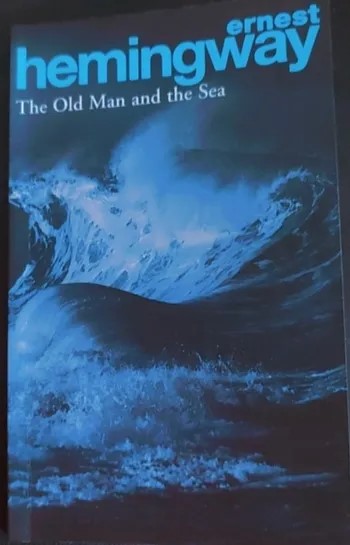
The Old Man and the Sea
By Hemingway ernest
This book was written simply and has two sides; one is adventurous, the other is full of life lessons. The main character of this book is the old man Santiago, who is a very experienced and skilled fisherman from Cuba. He was called “salao” by the local people of his area, which means he was at the worst form of unluckiness. The other highlighted character is Manolin, a young boy who learned fishing from Santiago and really loves and cares about him. Because of family restrictions Manolin wasn’t able to join Santiago in his next fishing journey, and just wished him very good luck. But it was Santiago’s fortune, his bad luck stayed with him for 84 days of his fishing on the sea of Cuba. Twist came on the 85th day, which suddenly changed the story when Santiago hooked a marlin fish. The smart giant marlin then started making him struggle every single moment. Though insufficient sleep, wounded hand, hunger, and thrust made Santiago physically weak but he was a young-minded old man who challenged the fish and vowed to kill this giant soon. It took 3 days to kill the fish. The story didn’t end here, he was with a piece of good luck this time but again luck betrayed him. As he was in the sea on the way to his home, a group of sharks attacked the dead fish. Then Santiago’s struggle continued with this verse of the story. Just imagine an old man in the middle of the sea with a dead fish attacked by a group of dangerous sharks, what could be more worse than that? After a treacherous fight finally, he was able to reach home with that giant, though only its trace remained there with him. The story ended with a bunch of beautiful and thrilling memories from the sea and a lesson to stay happy in every situation.ing about this story has to be the pure, ra
This book was written simply and has two sides; one is adventurous, the other is full of life lessons. The main character of this book is the old man Santiago, who is a very experienced and skilled fisherman from Cuba. He was called “salao” by the local people of his area, which means he was at the worst form of unluckiness. The other highlighted character is Manolin, a young boy who learned fishing from Santiago and really loves and cares about him. Because of family restrictions Manolin wasn’t able to join Santiago in his next fishing journey, and just wished him very good luck. But it was Santiago’s fortune, his bad luck stayed with him for 84 days of his fishing on the sea of Cuba. Twist came on the 85th day, which suddenly changed the story when Santiago hooked a marlin fish. The smart giant marlin then started making him struggle every single moment. Though insufficient sleep, wounded hand, hunger, and thrust made Santiago physically weak but he was a young-minded old man who challenged the fish and vowed to kill this giant soon. It took 3 days to kill the fish. The story didn’t end here, he was with a piece of good luck this time but again luck betrayed him. As he was in the sea on the way to his home, a group of sharks attacked the dead fish. Then Santiago’s struggle continued with this verse of the story. Just imagine an old man in the middle of the sea with a dead fish attacked by a group of dangerous sharks, what could be more worse than that? After a treacherous fight finally, he was able to reach home with that giant, though only its trace remained there with him. The story ended with a bunch of beautiful and thrilling memories from the sea and a lesson to stay happy in every situation.ing about this story has to be the pure, ra
Original Title
The Old Man and the Sea
Subject & College
Publish Date
1952-01-01
Published Year
1952
Publisher, Place
Jonathan cape
Total Pages
99
ISBN
978-0-09-990840-1
Country
UK,london
Readers Feedback
The Old Man and the Sea
Ernest Hemingway’s novella The Old Man and the Sea, published in 1952, is a timeless tale of perseverance, pride, and the human spirit. Set in...Read More

Sonar Kkavyakshi Harish
The Old Man and the Sea
Ernest Hemingway’s novella The Old Man and the Sea, published in 1952, is a timeless tale of perseverance, pride, and the human spirit. Set in a small Cuban fishing village, the story focuses on Santiago, an aging fisherman, and his epic struggle with a giant marlin in the Gulf Stream. This Pulitzer Prize-winning work is one of Hemingway’s finest, showcasing his mastery of minimalist prose and deep themes.
The story begins with Santiago’s unfortunate streak of 84 days without catching a fish, leaving him labeled as unlucky in his community. Despite his misfortune, he is respected by a young boy, Manolin, who cares for him and learns from his wisdom. On the 85th day, Santiago sets out alone, determined to end his unlucky streak. He hooks an enormous marlin, beginning a three-day struggle that tests his physical and mental endurance. Santiago finally kills the marlin, but sharks devour it on his way back to shore, leaving him with only its skeleton. The story ends with Santiago’s quiet defeat yet inner triumph, as he dreams of lions—symbols of his youthful strength and enduring spirit.
Hemingway’s novella is a masterful exploration of themes like human resilience, isolation, and man’s relationship with nature. Santiago’s struggle with the marlin is both literal and symbolic. The marlin represents a worthy adversary, embodying beauty, strength, and grace, while Santiago’s battle with it reflects the universal human quest for purpose and meaning. Through Santiago, Hemingway portrays the dignity of struggle, suggesting that success is measured not by victory but by the effort and perseverance displayed in the face of adversity.
The novella also examines the tension between man and nature. Santiago respects the marlin and views it as a brother, reflecting Hemingway’s admiration for nature. However, the sharks, which destroy Santiago’s hard-earned prize, highlight the cruelty and unpredictability of the natural world. This duality reinforces the idea that triumph and defeat often coexist.
Hemingway’s writing style is a standout feature of the book. His simple, direct prose captures the essence of Santiago’s solitary journey while leaving room for readers to infer deeper meanings. The vivid imagery of the sea, the marlin, and Santiago’s battle immerses readers in the story. The recurring motifs, such as the lions in Santiago’s dreams, add layers of symbolism and poignancy.
The Old Man and the Sea is a remarkable tale of resilience and human spirit. Santiago’s determination and unwavering resolve make him an inspiring protagonist. The book’s themes of struggle and dignity resonated deeply with me, especially the idea that true success lies in giving one’s best effort, regardless of the outcome. The novella’s brevity and simplicity make it accessible, yet its profound themes linger long after reading. However, some readers may find the story’s slow pace challenging, and its minimalist style might feel sparse. Despite this, the book’s depth and emotional power make it a must-read for anyone seeking an introspective and thought-provoking experience.
In conclusion, The Old Man and the Sea is a literary masterpiece that captures the beauty and tragedy of life’s struggles. Hemingway’s portrayal of Santiago’s battle with the marlin serves as a metaphor for the human condition, emphasizing resilience, dignity, and the enduring power of the human spirit. This timeless classic is a must-read for all lovers of literature.