
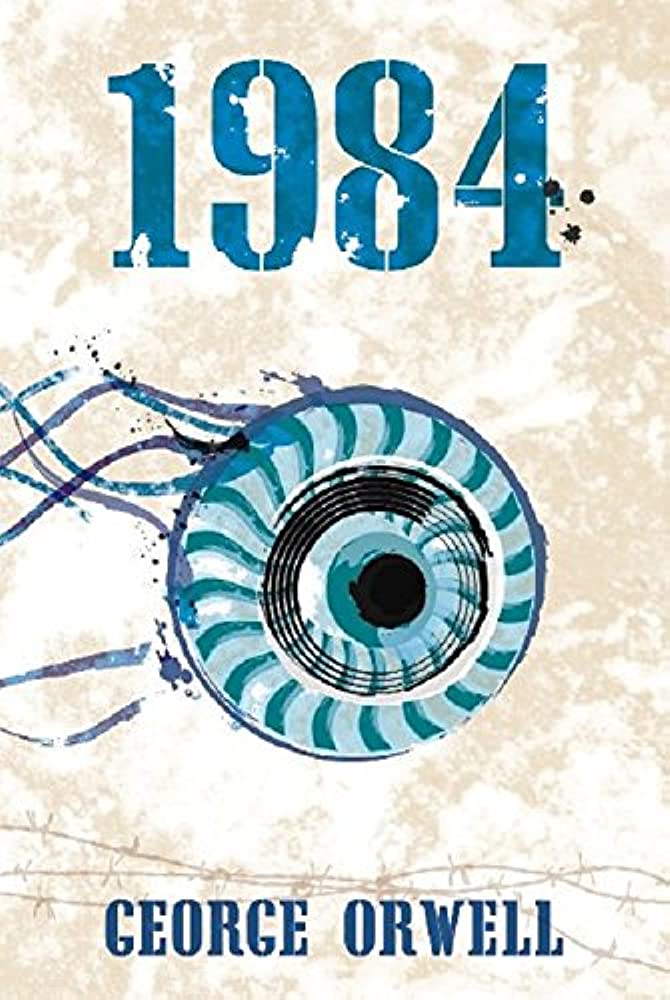
George Orwell’s 1984 is a timeless and powerful novel that explores the dangers of totalitarianism, constant surveillance, and the loss of personal freedom. Written in 1949, the book imagines a bleak future where the government controls every aspect of life, from public actions to private thoughts. Its warnings about unchecked power and the manipulation of truth remain deeply relevant today, making it a must-read for anyone concerned about freedom and justice.
The story takes place in Airstrip One, formerly known as Great Britain, which is now part of a superstate called Oceania. The government, led by the mysterious Big Brother, enforces absolute control over the population. The protagonist, Winston Smith, works at the Ministry of Truth, where his job is to rewrite history to fit the Party’s ever-changing version of events. Though outwardly obedient, Winston secretly despises the regime. He begins a forbidden love affair with Julia, another Party member, and starts keeping a journal of his rebellious thoughts. Together, they dream of a life free from the Party’s oppression. However, their acts of defiance are short-lived, as the Party’s reach is absolute, and their rebellion ends in betrayal and despair.
One of the central themes of 1984 is the terrifying power of a totalitarian government. Orwell shows how a regime can dominate not just actions but thoughts, turning citizens into mere tools of the state. The Party’s control is maintained through fear, propaganda, and constant surveillance, ensuring that no one dares to question its authority. Orwell’s vivid depiction of this oppressive system is a warning about the dangers of absolute power and the importance of protecting freedom and individuality.
Another key theme is the invasion of privacy. In Oceania, there is no such thing as personal space. The Party watches every citizen through telescreens that cannot be turned off and employs the Thought Police to punish unapproved ideas. This constant surveillance creates a world of fear and paranoia, where even the smallest sign of disloyalty can lead to imprisonment or death. The parallels to modern concerns about digital surveillance and privacy make Orwell’s message especially relevant in today’s world.
The manipulation of truth is also a major focus of the novel. Winston’s job at the Ministry of Truth involves rewriting old records to match the Party’s current narrative. The Party’s slogan, “Who controls the past controls the future: who controls the present controls the past,” highlights its goal of erasing real history to create a version that serves its agenda. This manipulation of reality leaves people powerless to question the Party’s authority. In an age where misinformation can spread rapidly, Orwell’s warnings about the dangers of controlling information feel particularly urgent.
Language plays a significant role in the Party’s control over its citizens. The development of Newspeak, a simplified language designed to eliminate complex thought, is a chilling example of how limiting language can limit freedom. By reducing the number of words available, the Party seeks to make rebellion not just difficult but impossible. This theme reminds us of the importance of free expression and the role language plays in shaping how we think and understand the world.
The characters in 1984 bring these themes to life. Winston Smith is a relatable protagonist whose longing for truth and freedom makes his struggle deeply moving. Julia, his partner in rebellion, offers a more practical perspective, showing how resistance can be personal as well as political. O’Brien, a high-ranking Party official, is a complex and sinister figure who reveals the Party’s brutal methods of control. Big Brother, though never seen, looms over everything as a symbol of the Party’s absolute power.
Orwell’s writing is straightforward but incredibly effective. He creates a world that feels bleak and oppressive, drawing readers into its harsh reality. The novel’s pacing builds tension as Winston’s rebellion grows, leading to a heartbreaking conclusion that leaves a lasting impact. The grim tone and vivid descriptions make the story unforgettable, urging readers to reflect on the dangers of losing personal and political freedoms.
What makes 1984 so remarkable is how relevant it remains. In a world where technology enables constant monitoring, misinformation spreads quickly, and freedoms can feel fragile, Orwell’s warnings are more important than ever. The novel challenges us to stay vigilant, question authority, and value the rights we often take for granted.
In conclusion, 1984 is a powerful and thought-provoking novel that continues to resonate across generations. Its exploration of totalitarianism, surveillance, and the manipulation of truth serves as a stark reminder of what can happen when power is unchecked. Through its compelling story and relatable characters, it urges us to protect our freedoms and resist forces that seek to control us. 1984 is not just a book; it is a call to action and a reminder of the resilience of the human spirit.
George Orwell’s 1984 is a timeless and powerful novel that explores the dangers of totalitarianism, constant surveillance, and the loss of personal freedom. Written in 1949, the book imagines a bleak future where the government controls every aspect of life, from public actions to private thoughts. Its warnings about unchecked power and the manipulation of truth remain deeply relevant today, making it a must-read for anyone concerned about freedom and justice.
The story takes place in Airstrip One, formerly known as Great Britain, which is now part of a superstate called Oceania. The government, led by the mysterious Big Brother, enforces absolute control over the population. The protagonist, Winston Smith, works at the Ministry of Truth, where his job is to rewrite history to fit the Party’s ever-changing version of events. Though outwardly obedient, Winston secretly despises the regime. He begins a forbidden love affair with Julia, another Party member, and starts keeping a journal of his rebellious thoughts. Together, they dream of a life free from the Party’s oppression. However, their acts of defiance are short-lived, as the Party’s reach is absolute, and their rebellion ends in betrayal and despair.
One of the central themes of 1984 is the terrifying power of a totalitarian government. Orwell shows how a regime can dominate not just actions but thoughts, turning citizens into mere tools of the state. The Party’s control is maintained through fear, propaganda, and constant surveillance, ensuring that no one dares to question its authority. Orwell’s vivid depiction of this oppressive system is a warning about the dangers of absolute power and the importance of protecting freedom and individuality.
Another key theme is the invasion of privacy. In Oceania, there is no such thing as personal space. The Party watches every citizen through telescreens that cannot be turned off and employs the Thought Police to punish unapproved ideas. This constant surveillance creates a world of fear and paranoia, where even the smallest sign of disloyalty can lead to imprisonment or death. The parallels to modern concerns about digital surveillance and privacy make Orwell’s message especially relevant in today’s world.
The manipulation of truth is also a major focus of the novel. Winston’s job at the Ministry of Truth involves rewriting old records to match the Party’s current narrative. The Party’s slogan, “Who controls the past controls the future: who controls the present controls the past,” highlights its goal of erasing real history to create a version that serves its agenda. This manipulation of reality leaves people powerless to question the Party’s authority. In an age where misinformation can spread rapidly, Orwell’s warnings about the dangers of controlling information feel particularly urgent.
Language plays a significant role in the Party’s control over its citizens. The development of Newspeak, a simplified language designed to eliminate complex thought, is a chilling example of how limiting language can limit freedom. By reducing the number of words available, the Party seeks to make rebellion not just difficult but impossible. This theme reminds us of the importance of free expression and the role language plays in shaping how we think and understand the world.
The characters in 1984 bring these themes to life. Winston Smith is a relatable protagonist whose longing for truth and freedom makes his struggle deeply moving. Julia, his partner in rebellion, offers a more practical perspective, showing how resistance can be personal as well as political. O’Brien, a high-ranking Party official, is a complex and sinister figure who reveals the Party’s brutal methods of control. Big Brother, though never seen, looms over everything as a symbol of the Party’s absolute power.
Orwell’s writing is straightforward but incredibly effective. He creates a world that feels bleak and oppressive, drawing readers into its harsh reality. The novel’s pacing builds tension as Winston’s rebellion grows, leading to a heartbreaking conclusion that leaves a lasting impact. The grim tone and vivid descriptions make the story unforgettable, urging readers to reflect on the dangers of losing personal and political freedoms.
What makes 1984 so remarkable is how relevant it remains. In a world where technology enables constant monitoring, misinformation spreads quickly, and freedoms can feel fragile, Orwell’s warnings are more important than ever. The novel challenges us to stay vigilant, question authority, and value the rights we often take for granted.
In conclusion, 1984 is a powerful and thought-provoking novel that continues to resonate across generations. Its exploration of totalitarianism, surveillance, and the manipulation of truth serves as a stark reminder of what can happen when power is unchecked. Through its compelling story and relatable characters, it urges us to protect our freedoms and resist forces that seek to control us. 1984 is not just a book; it is a call to action and a reminder of the resilience of the human spirit.