
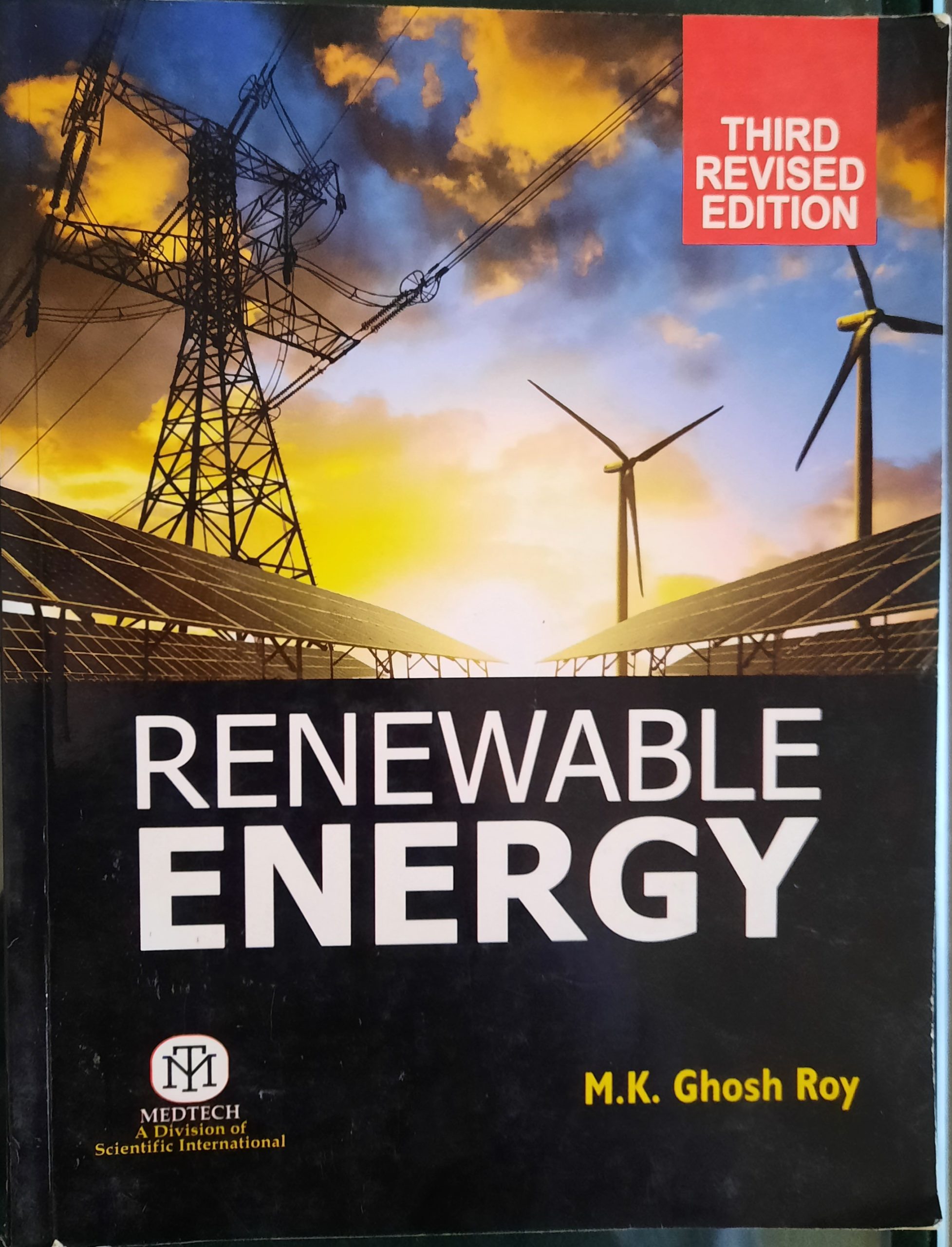
This book is written for the students of renewable energy. Further it also contains valuable information for general people who work or having interest in renewable energy fields such as industry, government and research institutes. It would be a useful book for academic people working in teaching, research & extension activities related to Renewable Energy Sources.
This book is divided into two parts i.e. theory and practical. Further theory section is divided into twelve chapters. Each chapter discusses different fundamentals & basics of technology with recent datas, figures, tables and graphs. The questions bank is also provided at the end of chapter to review the chapter. For quick revision multiple choice and fill in the blank type questions are also given at the end of each chapter.
For efficient utilization of different Renewable Energy Technology, practical manual is also provided with 23 experiments. Each experiment has been described with experimental setup, precautions, observations and results.
Today no single energy sources whether conventional or non conventional can meet our society’s future energy needs. The answer lies instead in a family of diverse energy technologies that share a common thread which do not deplete our natural resources or destroy our environment.
Renewable energy technologies tap into natural cycles and systems, turning the ever-present energy around us into usable forms. The movement of wind and water, the heat and light of the sun, heat in the ground, the carbohydrates in plants all are natural energy sources that can supply our needs in a sustainable way. Because they are homegrown, renewables can also increase our energy security and create local jobs, keeping in view to educate the coming generation with renewable energy technologies.
The educational institutes/ government bodies emphasised development of the technology for efficient utilization of freely available renewable energy sources. In this regard a document in form of book has been brought out from the staff of renewable energy group of MPUAT, Udaipur.
The authors thanks are due to faculty and staff members of Department of Renewable Energy Sources for their encouragement during preparation of manuscript. Thanks are also due to Mr. Harish Arya, M/s Himanshu Publications, Udaipur who has brought out this book in short time. Last but not least thanks are due to Mr. Hemant Sharma who typed and prepared manuscript with minimum typing errors.
The book is very very good for depth knowledge. It is helpful for B.Sc students and also for competitive exams. A masterpiece for Basic course on Renewable energy.
Written for general physics courses that emphasize temperature-dependent phenomena, this text deals with large-scale thermal phenomena and then proceeds to small-scale less accessible phenomena. Examples of calculations are presented after important formulas are derived, and actual thermodynamic experiments are explained in detail.
I found this book to be only ‘ok’ for my Renewable energy course (though i suspect a text in differential equations would have been better than this for Renewable energy), but found it extremely useful for my statistical mechanics and solid state physics courses.
The book can be written in more easy language.
This book is written for the students of renewable energy. Further it also contains valuable information for general people who work or having interest in renewable energy fields such as industry, government and research institutes. It would be a useful book for academic people working in teaching, research & extension activities related to Renewable Energy Sources.
This book is divided into two parts i.e. theory and practical. Further theory section is divided into twelve chapters. Each chapter discusses different fundamentals & basics of technology with recent datas, figures, tables and graphs. The questions bank is also provided at the end of chapter to review the chapter. For quick revision multiple choice and fill in the blank type questions are also given at the end of each chapter.
For efficient utilization of different Renewable Energy Technology, practical manual is also provided with 23 experiments. Each experiment has been described with experimental setup, precautions, observations and results.
Today no single energy sources whether conventional or non conventional can meet our society’s future energy needs. The answer lies instead in a family of diverse energy technologies that share a common thread which do not deplete our natural resources or destroy our environment.
Renewable energy technologies tap into natural cycles and systems, turning the ever-present energy around us into usable forms. The movement of wind and water, the heat and light of the sun, heat in the ground, the carbohydrates in plants all are natural energy sources that can supply our needs in a sustainable way. Because they are homegrown, renewables can also increase our energy security and create local jobs, keeping in view to educate the coming generation with renewable energy technologies.
The educational institutes/ government bodies emphasised development of the technology for efficient utilization of freely available renewable energy sources. In this regard a document in form of book has been brought out from the staff of renewable energy group of MPUAT, Udaipur.
The authors thanks are due to faculty and staff members of Department of Renewable Energy Sources for their encouragement during preparation of manuscript. Thanks are also due to Mr. Harish Arya, M/s Himanshu Publications, Udaipur who has brought out this book in short time. Last but not least thanks are due to Mr. Hemant Sharma who typed and prepared manuscript with minimum typing errors.
The book is very very good for depth knowledge. It is helpful for B.Sc students and also for competitive exams. A masterpiece for Basic course on Renewable energy.
Written for general physics courses that emphasize temperature-dependent phenomena, this text deals with large-scale thermal phenomena and then proceeds to small-scale less accessible phenomena. Examples of calculations are presented after important formulas are derived, and actual thermodynamic experiments are explained in detail.
I found this book to be only ‘ok’ for my Renewable energy course (though i suspect a text in differential equations would have been better than this for Renewable energy), but found it extremely useful for my statistical mechanics and solid state physics courses.
The book can be written in more easy language.