
Availability
available
Original Title
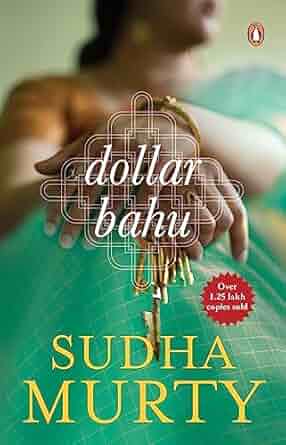
Dollar Bahu
Subject & College
Series
Publish Date
2007-01-01
Published Year
2007
Publisher, Place
Total Pages
142
ISBN 13
9780143103769
Country
India
Language
English
Print Length
142
Readers Feedback
Indian middle-class values of love and respect
Dollar Bahu by Sudha Murty is a captivating novel that explores the intricacies of family dynamics and cultural values. The book belongs to the literary...Read More

Bushra Asif Sayyed
Indian middle-class values of love and respect
Dollar Bahu by Sudha Murty is a captivating novel that explores the intricacies of family dynamics and cultural values. The book belongs to the literary fiction genre, set within the context of Indian society and the allure of Western affluence. It reflects on the timeless conflict between materialism and emotional fulfilment.
I picked up Dollar Bahu intrigued by its premise of contrasting values and its promise to shed light on how wealth affects relationships, especially in the Indian family structure.
Summary
The author explores the impact of money on family dynamics. Vinuta, married to Girish, faces challenges living with her in-laws in Bangalore, especially under her mother-in-law Gouramma’s taunts. When Chandru, Girish’s wealthy brother in the US, is admired for his luxurious lifestyle, Vinuta faces unfair comparisons. Gouramma’s visit to the US opens her eyes to the lack of respect abroad, changing her perspective on Indian middle-class values of love and respect.
Plot Overview:
The novel revolves around the Gauramma family and their two sons, Girish and Chandru. Girish lives modestly in India with his wife Vinuta, while Chandru, who works in the United States, earns a significant income. The title, Dollar Bahu, refers to Chandru's wife, Jamuna, whose wealth and status make her the favored daughter-in-law in the eyes of Gauramma. However, a visit to the United States challenges Gauramma's perceptions, leading her to question the true essence of happiness and familial bonds.
Themes:
Key themes include the impact of wealth on relationships, the clash between traditional and modern values, and the importance of emotional connections over material possessions. The book also highlights the immigrant experience and the sacrifices it entails.
Setting:
The story alternates between India and the United States. The Indian setting underscores traditional family values, while the U.S. symbolizes materialism and cultural alienation. These settings play a crucial role in highlighting the stark differences in lifestyles and values.
Writing Style:
Sudha Murty’s writing is simple, straightforward, and emotionally resonant. Her ability to convey complex emotions through everyday language makes the book accessible to a wide audience.
Character Development:
Gauramma's transformation is the most significant, as her experiences lead to a deeper understanding of what truly matters in life. The other characters, though slightly stereotypical, serve their roles effectively in driving the narrative.
Plot Structure/Practical Applications:
The plot is linear and predictable, with a few poignant moments. The story’s coherence and relatable events make it easy to follow. The practical takeaway is the importance of valuing people for who they are, not for what they possess.
Themes and Messages:
The novel effectively conveys its messages about the dangers of materialism and the importance of family and emotional fulfilment.
Emotional Impact:
The book evokes a mix of emotions—frustration at the unfair treatment of Vinuta, sympathy for Gauramma’s eventual realization, and a sense of hope for the power of familial love.
Strengths and Weaknesses
● Strengths:
Relatable characters and situations, especially for readers familiar with Indian family dynamics. A strong moral message about the value of relationships over wealth. Simple and engaging storytelling.
● Weaknesses:
– The plot is somewhat predictable, with limited twists or surprises.
– Some characters, such as Jamuna, could have been more fleshed out.
– The resolution feels rushed, with Gauramma’s change of heart happening too quickly.
Personal Reflection
● Connection:
As someone who values family relationships, I found the book deeply relatable. Gauramma’s journey of realization resonated with me, reminding me of the importance of gratitude and empathy.
● Relevance:
The book remains relevant in today’s world, where materialism often overshadows emotional connections. It also sheds light on the immigrant experience, a topic of global significance.
Conclusion
● Recommendation:
I would recommend “Dollar Bahu” to readers who enjoy family dramas and stories with moral lessons, particularly young adults and those interested in Indian culture.
● Final Thoughts:
Dollar Bahu is a heartwarming tale that challenges readers to reflect on their priorities and the true meaning of happiness. While its simplicity may not appeal to everyone, its emotional depth and relatable themes make it a memorable read.
Bushra Asif Sayyed
Cost of Relationships
About the Book Dollar Bahu explores the intricate dynamics of a middle-class Indian family torn between traditional values and the allure of Western materialism. Through...Read More

Patare Aarti Bhagvan
Cost of Relationships
About the Book
Dollar Bahu explores the intricate dynamics of a middle-class Indian
family torn between traditional values and the allure of Western
materialism. Through the lens of interpersonal relationships, Murthy
sheds light on societal issues, the impact of wealth, and the perception
of success.
About the Plot
The story revolves around the Gauramma family, headed by a
conservative matriarch, Gauramma, and her husband, Shamanna. Their
two sons, Chandru and Girish, take divergent paths in life. Chandru
moves to the United States, earning the title of "Dollar Son" due to his
financial success, while Girish remains in India, living a modest life.
The arrival of Chandru's wife, Jamuna, the titular "Dollar Bahu," sets
off a chain of events that brings to light favouritism, greed, and the
yearning for a better life abroad.
The narrative takes a twist when Gauramma, who idolizes Chandru and
criticizes Girish's wife, Vinuta, visits the U.S. herself. Her experience
unveils the stark reality behind the glitzy facade of life abroad,
challenging her prejudices and assumptions.
About the Characterization
The characters in Dollar Bahu are not just vivid, but also deeply
relatable, embodying the complexities of human emotions. Gauramma
is depicted as a flawed yet redeemable character whose biases drive
much of the conflict. Chandru and Girish represent the diverging
aspirations of Indian youth, while Vinuta and Jamuna highlight
contrasting experiences of familial expectations. The strength of the
characterization lies in its authenticity and its ability to evoke empathy,
making the readers feel a strong connection to the story.
About the Themes
The book delves into themes such as:
Materialism vs. Values: Examining how wealth influences familial
relationships and societal standing.
Cultural Contrasts: Dollar Bahu does an excellent job of highlighting
the divide between Indian traditions and Western lifestyles. This
exploration will leave readers feeling intrigued and culturally aware, as
they delve into the complexities of cultural adaptation and the clash of
traditions.
Family Dynamics: Addressing favouritism, sibling rivalry, and the role
of women in preserving family harmony.
Perception vs. Reality: Exploring the illusions created by material
wealth.
About Overall Analysis
Dollar Bahu is a thought-provoking tale written in Sudha Murthy's
signature simple yet engaging prose. The book captures its characters'
emotional struggles and moral dilemmas while subtly but effectively
critiquing societal norms. Its concise structure ensures a fast-paced
read, making it accessible to a broad audience. The book's critique of
societal norms will leave readers feeling enlightened and thoughtful.
Your Opinion
Dollar Bahu is a compelling narrative that mirrors real-life scenarios in
many Indian households. Sudha Murthy's ability to articulate complex
emotions with simplicity is remarkable. While the resolution may feel
slightly predictable, the journey offers valuable lessons about humility,
contentment, and the futility of chasing materialistic dreams at the cost
of relationships.
Comparison with Similar Works
The book parallels Pride and Prejudice by Jane Austen, mainly focusing
on societal norms and family dynamics. However, it also shares
thematic similarities with works like The Namesake by Jhumpa Lahiri,
which examines cultural conflicts and immigrant experiences.
Appreciation/Critique
One of Dollar Bahu's strengths is its relatability and moral undertone.
However, some readers might find the characters overly stereotypical
and the resolution overly simplistic. A deeper exploration of Jamuna's
perspective could have added more nuance to the narrative.
Conclusion
Dollar Bahu poignantly reminds us to value relationships over wealth.
It is a must-read for those seeking moral lessons and engaging
storytelling. Sudha Murthy's ability to weave social commentary into a
family drama makes this book timeless.
Patare Aarti Bhagvan
“डॉलर बहू”
सुधा मूर्ती यांची "डॉलर बहू" ही कादंबरी भारतीय कुटुंबव्यवस्थेतील मूल्य, नातेसंबंध, आणि पैसा यातील संघर्षाचा सुंदर अभ्यास करते. ही कथा गौरी या आईच्या दृष्टिकोनातून सांगितली...Read More

Jayshri Kalbhor
“डॉलर बहू”
सुधा मूर्ती यांची “डॉलर बहू” ही कादंबरी भारतीय कुटुंबव्यवस्थेतील मूल्य, नातेसंबंध, आणि पैसा यातील संघर्षाचा सुंदर अभ्यास करते. ही कथा गौरी या आईच्या दृष्टिकोनातून सांगितली आहे. तिचा मोठा मुलगा श्याम अमेरिकेत डॉक्टर होतो आणि वसुधा या श्रीमंत मुलीशी लग्न करतो, ज्यामुळे ती “डॉलर बहू” बनते. गौरीला वाटते की वसुधाचे जीवन अतिशय सुखमय आहे, मात्र जेव्हा ती अमेरिकेला जाते, तेव्हा श्रीमंतीच्या जगामागील एकटेपणा आणि ताण जाणवतो.
कथेच्या शेवटी गौरी भारतात परतते आणि खरी संपत्ती नातेसंबंध, प्रेम, आणि आपुलकी असल्याचे ओळखते. सुधा मूर्ती यांनी या कादंबरीत पैसा आणि सुख यांतील संघर्ष आणि प्रेमाचे महत्त्व यावर प्रकाश टाकला आहे.
“डॉलर बहू” प्रत्येक वाचकाला विचार करायला लावते की जीवनातील खऱ्या मूल्यांकडे कसे पाहावे. लेखकाचा शैलीदार लेखनप्रकार आणि कथेतील वास्तवता यामुळे कादंबरी खूप प्रभावी ठरते.
डुंबरे केतन , ग्रंथपाल, पुणे जिल्हा शिक्षण मंडळाचे अभियांत्रिकी महाविद्यालय, मांजरी बु., पुणे
Jayshri Kalbhor
Dollar Bahu
"Dollar Bahu" Dollar Bahu is a sharp and insightful exploration of materialism, family dynamics, and the changing values in modern society. In this novel, Sudha...Read More

Mo. Yasir Sh. Riyaz Ah.
Dollar Bahu
“Dollar Bahu”
Dollar Bahu is a sharp and insightful exploration of materialism, family dynamics, and the changing values in modern society. In this novel, Sudha Murthy portrays a conflict between traditional values and the allure of wealth, focusing on the effect of foreign success on an Indian family. The central story revolves around Shantamma, a woman who is increasingly disillusioned with her daughter-in-law, whose migration to the U.S. and subsequent wealth disrupts the family’s established ways. Shantamma’s jealousy and disdain for her daughter-in-law’s success form the core of the narrative, but it’s through this tension that Murthy unearths larger themes about societal expectations and family relationships.
Murthy’s characterization is nuanced and real, with Shantamma’s bitterness and resentment reflecting the insecurity many feel when confronted with change. The tension between the desire for material wealth and the more subtle, unquantifiable values of family, love, and connection is a central theme in Dollar Bahu. Through the characters’ interactions, Murthy explores the idea of success in a modern world that often values material prosperity over emotional fulfillment and familial bonds.
What stands out in Dollar Bahu is Murthy’s ability to capture the emotional undercurrents that drive the characters’ decisions. Shantamma’s growing bitterness stems not just from jealousy, but from the fear of being left behind in a world that seems to place increasing importance on wealth and foreign success. The novel forces readers to confront the realities of materialism and its effects on relationships, often at the expense of love and loyalty.
The beauty of Dollar Bahu lies in its ability to convey its messages without being overtly preachy. Murthy’s storytelling is filled with subtle humor, and while the central conflict revolves around materialism, the book does not offer simple solutions. It leaves the reader to reflect on their own experiences and the choices they make, without providing any easy answers.
About The BookDollar Bahu is the story of how money can wreak havoc in the life of any family, if things spin out of control. Vinuta is a young woman, who marries Girish, who is a bank clerk. Vinuta then begins to live in Bangalore, with Girish’s family and starts to get accustomed to her new family. She gets used to this new change quite well and spends her life looking after her in-laws and her husband. She even tries her level best to ignore the taunts of her mother-in-law, Gouramma. Things take a turn for the worse, when Chandru, Girish’s elder brother, gets married. Chandru is based in the US, with his wife, the ‘Dollar Bahu’ and they live quite an extravagant life, because of the fact that Chandru earns well. Vinuta now faces constant comparisons between her and her new sister-in-law, much to Vinuta’s dismay. Now Gouramma, Vinuta’s mother-in-law, decides to pay Chandru a visit in the US, which turns things around.Gouramma now looks at the other side of life in the US, where she realizes that she will never get the respect there, which she gets in India. Even though middle-class life in India is difficult and bound by rules, it is one that is full of love and respect. Can this enlightening trip bring about a change in Vinuta and Gouramma’s relationship?