
Availability
available
Original Title
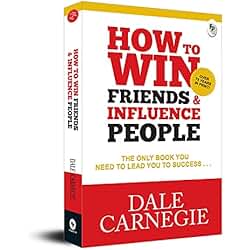
How To Win Friends And Influence People
Subject & College
Publish Date
1936
Published Year
1936
Publisher, Place
Total Pages
291
ISBN
1-4391-6734-6
Format
Hard Cover
Country
India
Language
English
Average Ratings
Readers Feedback
How to win friends and influence people by dale Carnegie talks about how to win people and basic fundamental techniques in handling people
Vaidya Kalpana Sukhdas, Assistant Professor (vaidyakalpana@gmail.com) Marathwada Mitra Mandal’s College of commerce, Pune Book Review – This book helped me get out of negative thinking...Read More

Vaidya Kalpana Sukhdas
How to win friends and influence people by dale Carnegie talks about how to win people and basic fundamental techniques in handling people
Vaidya Kalpana Sukhdas, Assistant Professor (vaidyakalpana@gmail.com) Marathwada Mitra Mandal’s College of commerce, Pune
Book Review – This book helped me get out of negative thinking and start seeing new possibilities in my life. Instead of focusing on problems or limitations, I began to think more positively and set better goals for myself. It also showed me how to make friends more easily by being more open, friendly, and understanding toward others. Because of this, I noticed that people started to like me more and felt more comfortable around me.
One of the biggest lessons I learned was how to help others understand my point of view without forcing my opinions on them. I learned that convincing people is not about arguing, but about communicating calmly and respectfully. This helped me build more confidence, increase my influence, and get things done more effectively. The ideas in the book also helped me attract more students and opportunities by improving the way I interact with people and present myself.
The book showed me how improving my communication skills can also improve my chances of earning more money in the future. By learning how to sell ideas clearly and lead students positively, I became more confident in taking responsibility and guiding others. I also learned how to handle complaints calmly instead of reacting emotionally, which helped me avoid unnecessary arguments and misunderstandings.
Another important improvement was in my speaking and conversation skills. I learned how to speak more clearly, confidently, and in a way that keeps conversations interesting. The book made psychology easy to understand by explaining how people think and behave in everyday situations. Because of this, I became better at motivating and inspiring the students around me.
One powerful lesson was that the best way to win an argument is to avoid it. Instead of trying to prove others wrong, I learned to respect their opinions and never directly tell them they are wrong. This helped keep conversations positive and respectful. I also learned to start conversations in a friendly and positive way, which makes people more open and cooperative.
Asking questions that encourage agreement was another useful skill. It helped conversations flow smoothly and made others feel involved. I learned to let the other person talk more than I do and to make them feel that the idea was theirs, not something forced on them. This made people more willing to accept suggestions.
The book also taught me to honestly try to understand things from the other person’s perspective. Being sympathetic to what others want and believe helped me connect with them better. By appealing to people’s better values and intentions, my ideas became more effective. I learned how to make my ideas interesting and easy to remember, and how to give students challenges that motivate them to take action and improve themselves.
This book helped me a lot personally I would recommend 5/5 for this book.