
Availability
available
Original Title
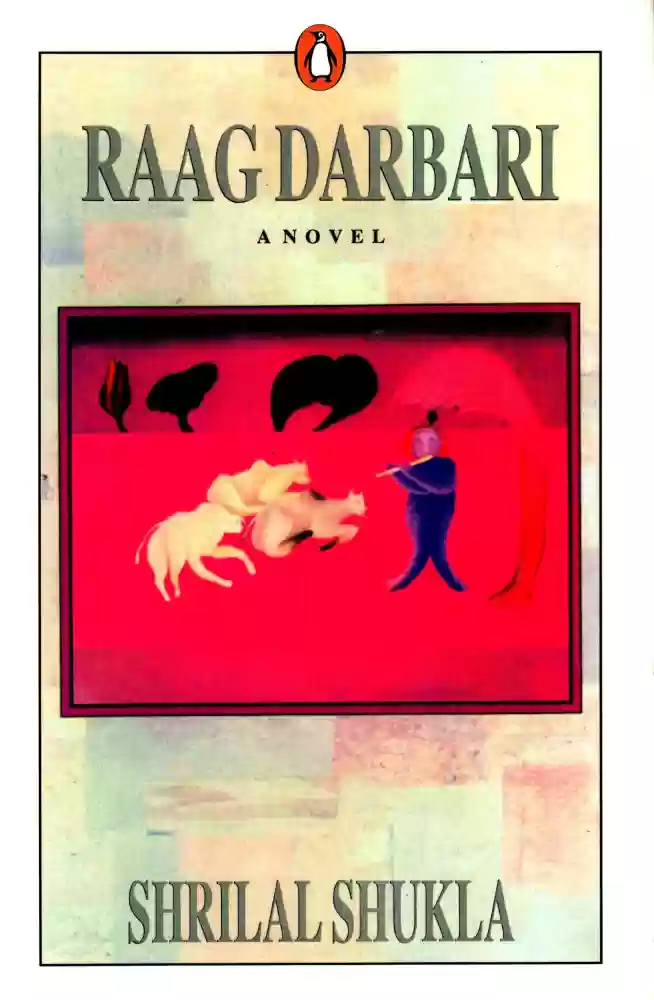
Raag Darbari
Subject & College
Publish Date
1968-01-01
Published Year
1968
Publisher, Place
ISBN
978-0143418894
Country
India
Average Ratings
Readers Feedback
Raag darbari
Raag Darbari,A satirical novel written by Shrilal Shukla in 1968. The cycle of corruption, power struggles, and exploitationis difficult to break and hope for reform...Read More

Archana singh
Raag darbari
Raag Darbari,A satirical novel written by Shrilal Shukla in 1968. The cycle of corruption, power struggles, and exploitationis difficult to break and hope for reform remains distant. It leaves the audience with a sense of inevitability and despair but also challenges them to reflection the realitoes of society, governance and human condition.
Archana singh
Raag Darbari
Review By Dr.Rajendra Gorakh Sarode, Associate Professor, Baburaoji Gholap College, Pune The novel, Raag Darbari by Shri Lal Sukla as a representation of the political...Read More

Dr.Rajendra Gorakh Sarode
Raag Darbari
Review By Dr.Rajendra Gorakh Sarode, Associate Professor, Baburaoji Gholap College, Pune
The novel, Raag Darbari by Shri Lal Sukla as a representation of the political scenario of India in the latter half of the twentieth century, wherein the village, Shivpalganj has been portrayed as a miniature India. He subsequently drew parallels between fiction and fact to bring forth the dynamics of politics and power games that had been eating into the vitals of India as a nation and kept it in constant flux.
After reading some excerpts from the novel, the speaker deliberated upon how the writer had cleverly exposed the ugly side of the nexus between politicians, businessmen, criminals, and policemen and how these people manipulate every situation to maintain the status quo. Referring to different characters in the novel, he pointed out how people in power gain control over democratic institutions and create their own ‘patronage democracy’ to enjoy the power eternally. The novel serves to be an excellent critical study of the corruption, nepotism, factionalism, and behind-the-scenes manipulation which were the order of the day in the sixties and unfortunately, are still in vogue in India in contemporary times. Nothing has changed except the players who continue to play this filthy game of treachery and deceit. The primordial elements that were ruling the roost in Shivpalganj village are prevalent and pervading even in contemporary India.
The novel touched a chord in the hearts of almost all the readers. Towards the end of the novel, the novelist raised some valid and significant questions regarding the promises that the constitution and Dr. B.R Ambedkar had made and we need to the extent of our realization. Have we progressed in education? Have women been really empowered? Have we given up coercion as a political tool? The questions sparked a lively discussion, which ended on an unfortunate consensus that in its real sense of the word, democracy seems to be a far-off dream for India to realize.
Literature is a mirror of society and it reflects different images of society, As a book reviewer, I observe similar political manipulation and criminal activities in Maharashtra with an alliance of political leaders. Rap and killing are considered common practices in Maharashtra by criminals with the blessing of government agencies. It is declining of humanity and the notion of an ideal state of Maharashtra In Maharashtra, criminals brutally killing young social leaders is nothing but symbolic representation by novelists through novels.