
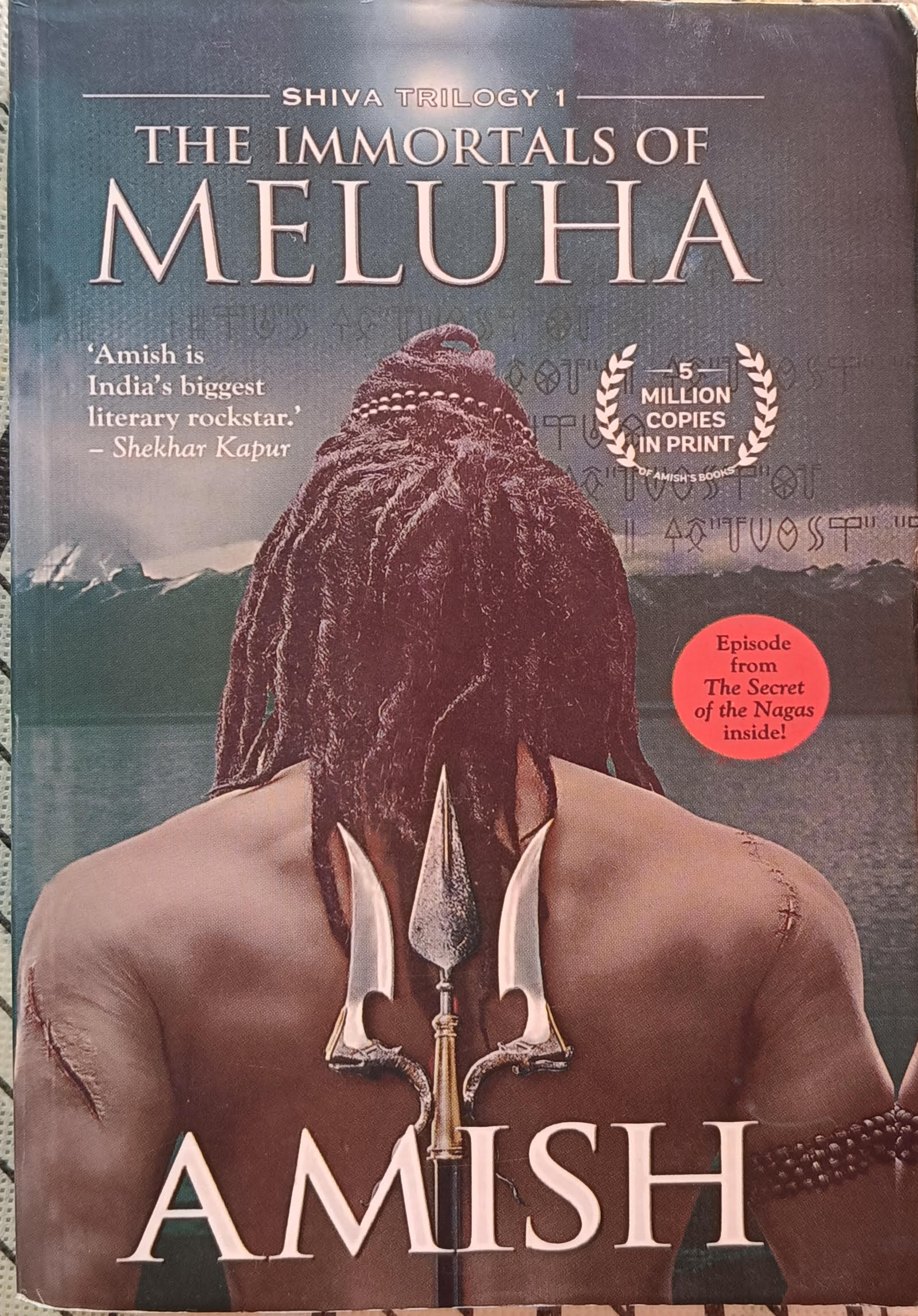
The Immortals of Meluha
By Tripathi Amish
Ujwal Premji Parmar, MBA Student
This is a mythological fiction novel, published in 2010. It is the first book in the Shiva Trilogy, re imagining the legend of Lord Shiva as a mortal hero set in the ancient land of Meluha.
I chose this book because of its unique retelling of Indian mythology and the idea of presenting Shiva as a human warrior, which seemed both creative and thought-provoking.
The novel follows Shiva, a tribal leader from Tibet, who is identified as the prophesied saviour, the Neelkanth, after arriving in the peaceful yet threatened kingdom of Meluha. As he embraces his destiny, he must protect the kingdom from the Chandravanshis and Nagas while dealing with his own internal conflicts.
Good vs. evil, destiny, leadership, and moral ambiguity.
Ancient Meluha, inspired by the Indus Valley Civilization, portrayed as a highly advanced and structured society.
Key characters include Shiva, Sati, Daksha, and Nandi. Shiva is depicted as a relatable hero with personal struggles, while Sati adds emotional depth.
The language is simple and easy to follow, with modern expressions that make it accessible to a wide audience.
Shiva evolves from a tribal leader to a responsible hero, while Sati’s character adds grace and emotional strength.
The story is well-paced, balancing action, romance, and philosophical elements.
Explores how good and evil can be a matter of perception, emphasizing leadership and personal growth.
The book leaves a lasting impression through its philosophical depth and character conflicts.
Unique blend of mythology and fiction, relatable characters, and philosophical depth.
Modern language feels out of place for the ancient setting, and some plot points are predictable.
I connected with Shiva’s internal struggles between duty and personal desires, which felt very relatable.
The themes of morality, leadership, and perspective are still relevant in today’s world.
I would recommend this book to readers interested in mythology, historical fiction, and stories of personal growth.
The Immortals of Meluha is a captivating and imaginative read that blends mythology with personal transformation, making it both entertaining and thought-provoking.
Ujwal Premji Parmar, MBA Student
This is a mythological fiction novel, published in 2010. It is the first book in the Shiva Trilogy, re imagining the legend of Lord Shiva as a mortal hero set in the ancient land of Meluha.
I chose this book because of its unique retelling of Indian mythology and the idea of presenting Shiva as a human warrior, which seemed both creative and thought-provoking.
The novel follows Shiva, a tribal leader from Tibet, who is identified as the prophesied saviour, the Neelkanth, after arriving in the peaceful yet threatened kingdom of Meluha. As he embraces his destiny, he must protect the kingdom from the Chandravanshis and Nagas while dealing with his own internal conflicts.
Good vs. evil, destiny, leadership, and moral ambiguity.
Ancient Meluha, inspired by the Indus Valley Civilization, portrayed as a highly advanced and structured society.
Key characters include Shiva, Sati, Daksha, and Nandi. Shiva is depicted as a relatable hero with personal struggles, while Sati adds emotional depth.
The language is simple and easy to follow, with modern expressions that make it accessible to a wide audience.
Shiva evolves from a tribal leader to a responsible hero, while Sati’s character adds grace and emotional strength.
The story is well-paced, balancing action, romance, and philosophical elements.
Explores how good and evil can be a matter of perception, emphasizing leadership and personal growth.
The book leaves a lasting impression through its philosophical depth and character conflicts.
Unique blend of mythology and fiction, relatable characters, and philosophical depth.
Modern language feels out of place for the ancient setting, and some plot points are predictable.
I connected with Shiva’s internal struggles between duty and personal desires, which felt very relatable.
The themes of morality, leadership, and perspective are still relevant in today’s world.
I would recommend this book to readers interested in mythology, historical fiction, and stories of personal growth.
The Immortals of Meluha is a captivating and imaginative read that blends mythology with personal transformation, making it both entertaining and thought-provoking.
Availability
available
Original Title
The Immortals of Meluha
Subject & College
Publish Date
2010-12-13
Published Year
2010
Publisher, Place
Total Pages
417
ISBN
9789380658742
Format
Hardcover
Country
India
Language
English
Average Ratings
Readers Feedback
Immortals of meluha
Reviewr Name : Ms.Vidhi Anant Baldota College Name: Nowrosjee Wadia College, Pune The Immortals of Meluha, is the first book in Shiva's Trilogy a book...Read More

Vidhi Anant Baldota
Immortals of meluha
Reviewr Name : Ms.Vidhi Anant Baldota
College Name: Nowrosjee Wadia College, Pune
The Immortals of Meluha, is the first book in Shiva’s Trilogy a book series by Mr. Tripathi which combines mythology, history, philosophy and imagination, a fiction which created an engaging narrative which makes the reader question the traditional believes while keeping the reader entertained with action; Insights about human nature, laws of nature, philosophy and adventure.
The world in this book is during the Indus civilization. It introduces the suryavanshis (a group of enlightened rulers) and chandravanshis then rivals. Shiva, is a warrior, the protagonist from Tibetan side of mountains living with his tribe, he embarks on this journey to understand his own self, his true identity, the mysteries surrounding his divinity. He is chosen by the people of Meluha to be their Maha-Dev, as they believe he is the figure who will save them from the enemies. Mr. Tripathi presents Shiva, not as a deity, but as a hero who faces challenges, who rises, and his karma, his actions & skills made people believe that he is God. This characterization of Shiva, leaves the readers,
with lot of imagination, and assumptions previously made are released. As a reader, a Shiva devotee and a person fond of mythological tales, this book triggers the feelings and emotions, it’s like you are on a journey with Shiva beside you, along with other characters as Brahaspati, Nandi and together you feel the pain he goes through, the love he has towards sati, his deep trust and friendship with his sub-ordinates also the people he admired. As the story proceeds there are glimpses of Nagas; the humans having deformed body, are presented with suspense making readers even more curious about them, their rivalry. Every city, place, palace, garden in his book has been described with such intricate details that you actually visualize and be at that place. The author has done the characterization along with the plot with utmost beauty. However, personally some character and relationship development between all the characters could have been improved along with some similar repetition of information. Some of my favorite scenes would be the conversations of Lord Shiva with Vishnu, Pandit (Priest) of temples and with my favorite character Brahaspati, with this the parts where Shiva taught dance to sati with so much patience and also the scene where he confronted his feelings towards Sati and there are many more. The complete book is filled with highs and lows, ups and downs throughout.
Talking about special features, it’s an action-packed plot including not only physical battles but also intellectual ones by engaging philosophical debates not only with other but also with oneself. It includes geographical accuracy along with detailed insights of built and structure of temples, cities and map it sketches of prehistoric India makes you believe it’s real.
This book explores profound philosophical questions, such as dharma, karma, and nature of good and evil. The characters face moral dilemmas that challenge then beliefs, adding layer of complexity. It unfolds our limiting beliefs that we set for our self.