
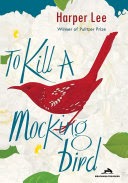
Original Title
To Kill a Mockingbird
Subject & College
Publisher, Place
Total Pages
281
Format
Paperback
Country
Egypt
Language
English
Readers Feedback
To Kill a Mockingbird
Wadkar Aditya,IVB.Arch.D,STES'S Sinhgad College of Architecture,Pune-41 Reading To Kill a Mockingbird was a moment of curiosity and high expectations for me. Many people say it’s...Read More

Wadkar Aditya
To Kill a Mockingbird
Wadkar Aditya,IVB.Arch.D,STES’S Sinhgad College of Architecture,Pune-41
Reading To Kill a Mockingbird was a moment of curiosity and high
expectations for me. Many people say it’s one of the best books ever, and
after reading it, I understand why. Harper Lee addresses heavy themes
like racism, justice, and morality in a personal and relatable way. The
story goes beyond a courtroom case; it explores growing up, facing tough
truths about the world, and learning to stand up for what’s right, even
when it’s difficult.
The novel is set in a small Southern town during the Great Depression
and is told from the perspective of young Scout Finch. Along with her
brother Jem and their friend Dill, Scout spends her summer trying to
figure out the mystery of their reclusive neighbor, Boo Radley.
Everything changes when Scout’s father, Atticus Finch, decides to
defend Tom Robinson, a Black man wrongfully accused of raping a
white woman.
What I love most about the story is how it mixes the innocence of
childhood with adult issues. Scout is on a journey to understand her
world. She questions why some people are treated unfairly, why others
are cruel, and what it means to do the right thing. Through her
perspective, we see both the good and the bad in people.
Atticus Finch has become one of my favorite characters. He is more than
a great lawyer; he is a fundamentally good person. His calm nature and
strong commitment to justice make him the moral heart of the story. I
admire how he handles difficult situations, knowing he will face
backlash for his choices.
Scout, as the narrator, is refreshing. She is curious, brave, and often
funny. Her view of the people in her town shows both innocence and
wisdom, providing insights that only a child's perspective can give. Boo
Radley starts as a scary figure but becomes one of the most touching
characters by the end.
The book’s portrayal of prejudice and justice deeply affected me. Tom
Robinson’s trial is heartbreaking, especially since we can sense from the
beginning that he won’t get a fair chance. It made me think about how
far we've come as a society, but also how much work is still needed.
However, it’s not all serious. There are many light moments, especially
between Scout, Jem, and their dad. The mix of light and dark is what
makes this book special—it shows the full range of human experience,
both good and bad.
To Kill a Mockingbird is more than just a story; it’s a powerful
experience that challenges you to rethink your beliefs and see the world
from different angles. It’s a book that stays with you long after you finish
reading it.
To Kill a Mockingbird
ARSH SIDDIQUI, FYBBA, Ashoka Center for Business and Computer Studies, Nashik. To Kill a Mockingbird by Harper Lee is a timeless classic of American literature,...Read More

ARSH SIDDIQUI
To Kill a Mockingbird
ARSH SIDDIQUI, FYBBA, Ashoka Center for Business and Computer Studies, Nashik.
To Kill a Mockingbird by Harper Lee is a timeless classic of American literature, first published in 1960. Spanning 281 pages, the novel is set in the racially segregated Southern United States during the 1930s and offers a poignant exploration of morality, justice, and human empathy. Narrated through the eyes of young Scout Finch, the story captures the innocence of childhood while addressing the harsh realities of prejudice and social injustice. Scout lives in the fictional town of Maycomb, Alabama, with her brother Jem and their widowed father, Atticus Finch, a principled lawyer.
The central plot revolves around Atticus defending a black man, Tom Robinson, falsely accused of raping a white woman, Mayella Ewell. As the trial unfolds, the children witness the deep-seated racism and hypocrisy of their community, while Atticus embodies integrity and courage, standing against overwhelming societal pressures. Alongside this, the subplot of Boo Radley, a mysterious recluse, adds an element of intrigue, ultimately tying into the novel’s themes of understanding and compassion.
Harper Lee’s writing is evocative, capturing the rhythms of Southern life and the complexity of human behavior. The book’s strength lies in its nuanced characters, particularly Atticus, who serves as a moral compass, and Scout, whose observations provide both humor and profound insight. Through their experiences, the novel examines themes such as the loss of innocence, the importance of empathy, and the destructive power of prejudice. The courtroom scenes are particularly gripping, highlighting systemic injustice while offering a powerful critique of societal norms.
To Kill a Mockingbird is as relevant today as it was when first published, offering timeless lessons on humanity and morality. It encourages readers to confront their own biases and consider the impact of their actions on others. Lee’s ability to blend a compelling narrative with profound themes makes the book both accessible and thought-provoking, appealing to readers of all ages.
I strongly recommend To Kill a Mockingbird for its enduring relevance and emotional depth. It is a book that not only tells a powerful story but also leaves a lasting impact, urging readers to strive for justice and understanding in their own lives. While its portrayal of racism and inequality may be difficult to process, it is precisely this unflinching honesty that makes it so impactful.
Rating: 5/5
A near-perfect novel, To Kill a Mockingbird is essential reading for anyone seeking to understand the complexities of human nature and the importance of empathy. Its universal themes and unforgettable characters make it a masterpiece of modern literature.