
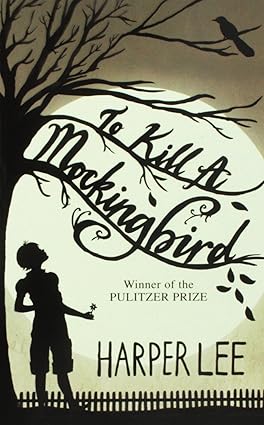
To Kill a Mockingbird

Share
Book Reviewed by Ms.Sharda  Bidve  – MBA I Student
Harper Lee’s To Kill a Mockingbird is an enduring classic that has captivated readers for generations with its poignant exploration of morality, justice, and human nature. Set in the racially segregated town of Maycomb, Alabama, during the Great Depression, the novel is narrated by Scout Finch, a young girl whose innocent perspective sheds light on the complexities of her community.
The story revolves around the Finch family: Scout, her older brother Jem, and their father Atticus, a principled lawyer. The plot is driven by Atticus’s decision to defend Tom Robinson, a Black man falsely accused of raping a white woman, Mayella Ewell. Through this trial, the novel delves into issues of racism, prejudice, and the loss of innocence, themes that remain relevant today.
One of the novel’s greatest strengths is its richly drawn characters. Scout, as the narrator, offers a blend of childlike curiosity and profound insight. Her observations, often tinged with humor, provide a stark contrast to the grim realities of her world. Jem’s journey from boyhood to adolescence reflects the struggles of understanding injustice, while Atticus emerges as the moral backbone of the story. His unwavering commitment to justice, compassion, and integrity makes him one of literature’s most admirable characters.
Tom Robinson’s trial serves as the novel’s centerpiece and a microcosm of the broader societal issues of the time. Through Atticus’s defense, Lee exposes the deep-seated racism that permeates the judicial system and the community at large. The trial’s outcome, though predictable, is profoundly disheartening, highlighting the systemic failures that deny justice to the oppressed.
Another vital aspect of the novel is its exploration of moral education. Atticus’s parenting style emphasizes empathy and understanding, urging Scout and Jem to “walk in someone else’s shoes” before passing judgment. This lesson is exemplified through their encounters with Boo Radley, the reclusive neighbor who becomes an object of fascination and fear. As the story unfolds, Boo transforms from a figure of mystery into a symbol of kindness and courage, challenging the children’s preconceived notions.
Lee’s prose is simple yet evocative, capturing the rhythms of Southern life and the innocence of childhood. Her ability to balance humor and gravity ensures that the novel remains engaging despite its weighty themes. The narrative’s structure, weaving together the trial and the children’s adventures, creates a compelling interplay between the personal and the societal.
The novel also critiques the deeply ingrained class and gender biases of its time. Through characters like Mayella Ewell and Calpurnia, the Finch family’s Black housekeeper, Lee portrays the intersection of race, class, and gender, highlighting how these factors shape individuals’ lives and opportunities. Mayella’s actions, while reprehensible, are rooted in her desperate circumstances, evoking a degree of pity and complicating the narrative of good versus evil.
Despite its many strengths, To Kill a Mockingbird has faced criticism in recent years. Some argue that its portrayal of race relations is overly simplistic, centering on a white savior narrative through Atticus’s role. Others question the novel’s relevance in a contemporary context, given its depiction of Black characters as largely passive and its limited exploration of their perspectives. However, these critiques also open up avenues for critical engagement and discussion, underscoring the novel’s continued impact.
Ultimately, To Kill a Mockingbird is a profound and thought-provoking work that invites readers to reflect on the moral dilemmas of their own time. Its enduring appeal lies in its ability to humanize complex issues, offering a lens through which to examine the values of empathy, justice, and resilience. As a story that bridges generations, it remains a cornerstone of American literature, challenging and inspiring readers to confront prejudice and strive for a more equitable world.
With its vivid characters, powerful themes, and timeless messages, To Kill a Mockingbird stands as a testament to the enduring power of storytelling. It is a must-read for anyone seeking to understand the complexities of human behavior and the pursuit of justice.
Price:  
₹1500
Share
Book Reviewed by Ms.Sharda  Bidve  – MBA I Student
Harper Lee’s To Kill a Mockingbird is an enduring classic that has captivated readers for generations with its poignant exploration of morality, justice, and human nature. Set in the racially segregated town of Maycomb, Alabama, during the Great Depression, the novel is narrated by Scout Finch, a young girl whose innocent perspective sheds light on the complexities of her community.
The story revolves around the Finch family: Scout, her older brother Jem, and their father Atticus, a principled lawyer. The plot is driven by Atticus’s decision to defend Tom Robinson, a Black man falsely accused of raping a white woman, Mayella Ewell. Through this trial, the novel delves into issues of racism, prejudice, and the loss of innocence, themes that remain relevant today.
One of the novel’s greatest strengths is its richly drawn characters. Scout, as the narrator, offers a blend of childlike curiosity and profound insight. Her observations, often tinged with humor, provide a stark contrast to the grim realities of her world. Jem’s journey from boyhood to adolescence reflects the struggles of understanding injustice, while Atticus emerges as the moral backbone of the story. His unwavering commitment to justice, compassion, and integrity makes him one of literature’s most admirable characters.
Tom Robinson’s trial serves as the novel’s centerpiece and a microcosm of the broader societal issues of the time. Through Atticus’s defense, Lee exposes the deep-seated racism that permeates the judicial system and the community at large. The trial’s outcome, though predictable, is profoundly disheartening, highlighting the systemic failures that deny justice to the oppressed.
Another vital aspect of the novel is its exploration of moral education. Atticus’s parenting style emphasizes empathy and understanding, urging Scout and Jem to “walk in someone else’s shoes” before passing judgment. This lesson is exemplified through their encounters with Boo Radley, the reclusive neighbor who becomes an object of fascination and fear. As the story unfolds, Boo transforms from a figure of mystery into a symbol of kindness and courage, challenging the children’s preconceived notions.
Lee’s prose is simple yet evocative, capturing the rhythms of Southern life and the innocence of childhood. Her ability to balance humor and gravity ensures that the novel remains engaging despite its weighty themes. The narrative’s structure, weaving together the trial and the children’s adventures, creates a compelling interplay between the personal and the societal.
The novel also critiques the deeply ingrained class and gender biases of its time. Through characters like Mayella Ewell and Calpurnia, the Finch family’s Black housekeeper, Lee portrays the intersection of race, class, and gender, highlighting how these factors shape individuals’ lives and opportunities. Mayella’s actions, while reprehensible, are rooted in her desperate circumstances, evoking a degree of pity and complicating the narrative of good versus evil.
Despite its many strengths, To Kill a Mockingbird has faced criticism in recent years. Some argue that its portrayal of race relations is overly simplistic, centering on a white savior narrative through Atticus’s role. Others question the novel’s relevance in a contemporary context, given its depiction of Black characters as largely passive and its limited exploration of their perspectives. However, these critiques also open up avenues for critical engagement and discussion, underscoring the novel’s continued impact.
Ultimately, To Kill a Mockingbird is a profound and thought-provoking work that invites readers to reflect on the moral dilemmas of their own time. Its enduring appeal lies in its ability to humanize complex issues, offering a lens through which to examine the values of empathy, justice, and resilience. As a story that bridges generations, it remains a cornerstone of American literature, challenging and inspiring readers to confront prejudice and strive for a more equitable world.
With its vivid characters, powerful themes, and timeless messages, To Kill a Mockingbird stands as a testament to the enduring power of storytelling. It is a must-read for anyone seeking to understand the complexities of human behavior and the pursuit of justice.

Original Title

To Kill a Mockingbird

Series

Publish Date

1988-10-11

Published Year

1988

Publisher, Place

Total Pages

384

ISBN 13

978-0446310789

Format

paperback

Country

United States

Language

English

Average Ratings

Readers Feedback

To kill a mocking bird

Name :- Khandate Soumya Prakashsing Dept. Of Sociology, SPPU Pune, First published in 1960, Harper Lee's To Kill a Mockingbird is widely regarded as one...Read More

Khandate Soumya Prakashsing

Khandate Soumya Prakashsing

×
To kill a mocking bird
Share

Name :- Khandate Soumya Prakashsing
Dept. Of Sociology, SPPU Pune,
First published in 1960, Harper Lee’s To Kill a Mockingbird is widely regarded as one of the most significant literary works that tackles the enduring problems of social stratification, racial inequity, and justice in 20th-century America. The book, which is set in the Great Depressionera fictitious town of Maycomb, Alabama, follows young Scout Finch and her brother Jem as they make their way through a society that is influenced by discrimination, social differences, and moral dilemmas. As sociology students we frequently view the world through its prism, To Kill a Mockingbird provides a deep examination of societal norms, systematic inequity, and the ways that race and class intersect to shape both individual and community identities. The social structure of Maycomb is inflexibly divided along ethnic and socioeconomic lines. Due to their education and family background, the Finch family has respect among the upper middle class. Families like the Ewells and Cunninghams, on the other hand, stand in for the underclass and working poor, respectively. The Cunninghams’ sense of dignity despite their poverty and the Ewells’ use of their racial superiority to oppress others despite their lower socioeconomic standing are two examples of how class stratification and power dynamics overlap in the book. Lee’s representation of the Ewells, and Bob Ewell in particular, highlights the ways in which structural injustice feeds cycles of ignorance and poverty. Tom Robinson is a Black guy who is at the bottom of society, thus Bob Ewell’s false charge against him is a desperate attempt to establish supremacy. This act demonstrates how, even at the price of justice, the nexus of race and class is used as a weapon to maintain white supremacy. The main plot of Tom Robinson’s trial reflects the racial tensions that characterized the South during the Jim Crow era. The systemic racism embedded in Maycomb’s legal and social structures is best illustrated by Robinson’s false accusation and subsequent conviction. Through the trial, Lee dispels the fallacy that the institutions that are supposed to administer justice are impartial. The all-white jury’s verdict, despite strong proof of Robinson’s innocence, reflects the community’s ingrained prejudices and general adherence to racial hierarchy. A deeper examination finds that the trial also highlights how social norms contribute to the continuation of inequality. In addition to being a legal representation, Atticus Finch’s defense of Robinson includes a moral stand against the social mores that are prevalent in his community. Atticus’s role as a white man defending a Black defendant, however, emphasizes the limitations of personal initiative in the face of structural oppression. Even though Atticus is praised for his moral bravery, the deeply ingrained bigotry that permeates Maycomb cannot be destroyed by his acts alone. In addition to its analysis of race and class, To Kill a Mockingbird also looks at gender roles and the limitations placed on them by patriarchy. The strict gender norms of Scout’s Day are challenged by her defiance of conventional femininity. She rejects the limited roles that are allocated to women and girls, as seen by her tomboyish behavior and preference for overalls over skirts. Lee exposes the wider effects of these expectations on personal identity and agency by criticizing the social pressures to adhere to gender standards through Scout. Scout’s aunt, Aunt Alexandra, represents the upholding of patriarchal standards by pressuring Scout to conform to traditional femininity and maintain the social standing of the Finch family.

Submit Your Review