
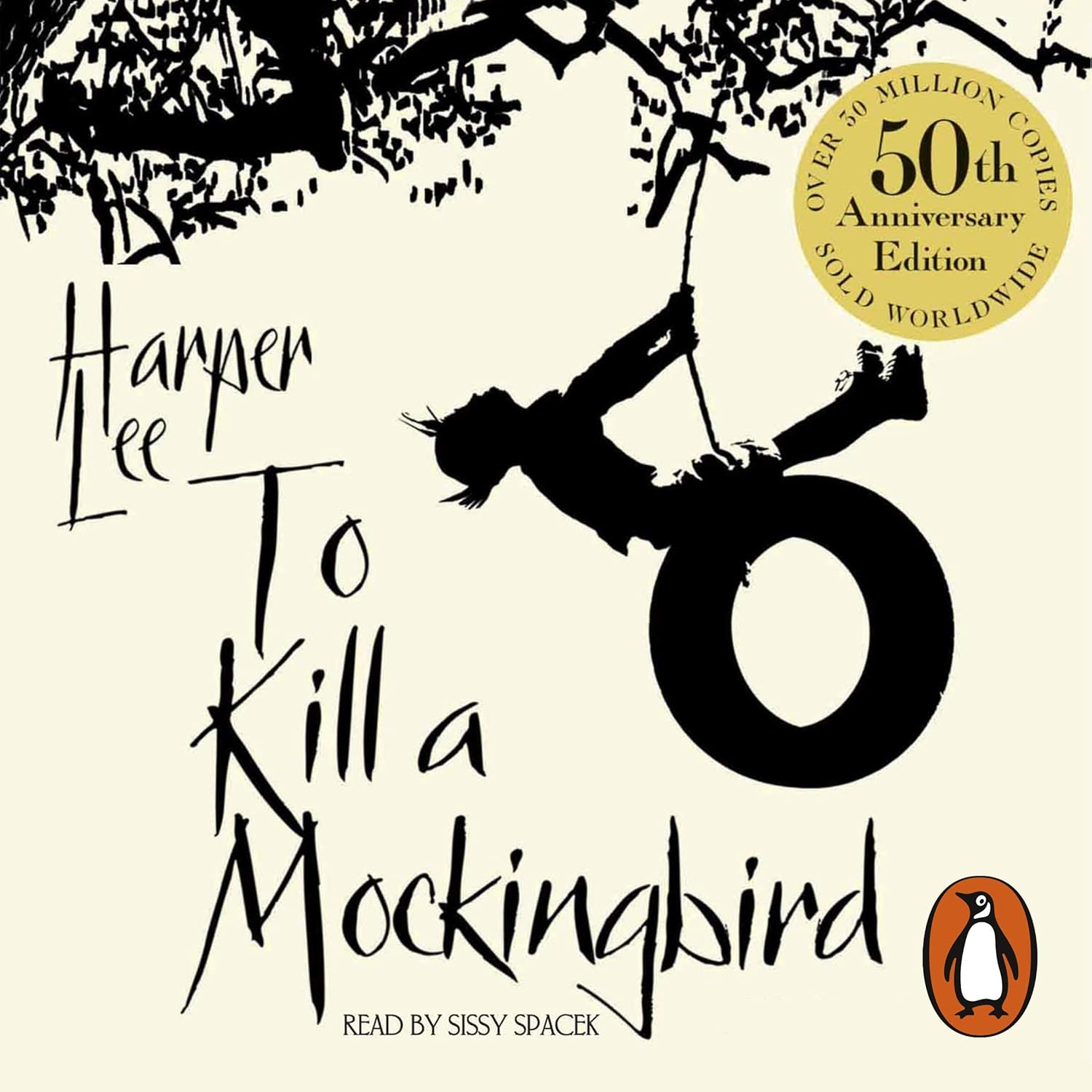
By Harper Lee
Original Title
To kill a mocking bird
Subject & College
Series
Publisher, Place
J. B. Lippincott & Co.
Format
Paperback
Language
English
Readers Feedback
To Kill a Mocking Bird
Shivani Gupta, Student of Sinhgad Law College The Great Depression-era fictitious Alabaman village of Maycomb serves as the setting for To Kill a Mockingbird. Jean...Read More

shivani Gupta
To Kill a Mocking Bird
Shivani Gupta, Student of Sinhgad Law College
The Great Depression-era fictitious Alabaman village of Maycomb serves as the setting for To Kill a Mockingbird. Jean Louise (“Scout”) Finch, the main character, is a bright but unorthodox youngster who grows between the ages of six and nine throughout the book. Atticus Finch, their widowed father, raises her and her brother, Jeremy Atticus, also known as “Jem.” He is a well-known attorney who instils empathy and justice in his kids. Notably, he informs them that killing a mockingbird is “a sin,” implying that the birds are harmless and innocent.
Atticus agrees to defend Tom Robinson, a Black resident of the town, after he is falsely accused of raping a white woman named Mayella Ewell. At one point, he is confronted by a mob that wants to lynch him, but Scout unintentionally defuses the situation. Atticus offers a defence that provides a more plausible interpretation of the evidence—that Mayella was attacked by her father, Bob Ewell—but Tom is convicted and killed while attempting to flee from custody. A character compares his death to “the senseless slaughter of songbirds,” which is parallel to Atticus’s statement about the mockingbird.
As they develop a fascination in Arthur (“Boo”) Radley, a reclusive neighbour and local legend, the kids act out their own miniature drama of prejudice and superstition. They can’t help but trespass on the Radley property because they have their own opinions about him. Their elders’ continued dehumanization feeds their conjectures. However, Atticus chastises them and attempts to promote a more considerate mindset. Through a string of kind deeds, Boo subtly establishes his presence before stepping in to stop Bob Ewell from attacking Jem and Scout. In order to spare the bashful Boo from unwelcome attention, Heck Tate, the sheriff, feels it would be more accurate to claim that Ewell died after falling on his own knife. Scout concurs, saying it would be “sort of like shooting a mockingbird” to do otherwise.
shivani Gupta
To kill a mocking bird
Book Review- ‘To kill a mocking bird’ by Harper Lee Asma K. 4th year B.A.LL. B C- DIV- 4216 Mockingbirds don’t do one thing except...Read More

Asma Khan
To kill a mocking bird
Book Review- ‘To kill a mocking bird’ by Harper Lee
Asma K.
4th year B.A.LL. B
C- DIV- 4216
Mockingbirds don’t do one thing except make music for us to enjoy. They don’t eat up
people’s gardens, don’t nest in corn cribs, they don’t do one thing but sing their hearts out
for us. That’s why it’s a sin To Kill a Mockingbird.”
— Harper Lee (Published in 1960)
This beautiful quote is from a book named to kill a mocking bird, written by harper lee. The
above quote symbolizes the innocence and goodness represented by the “mockingbirds” of the
story—characters like Tom Robinson and Boo Radley. Mockingbirds, as described, bring only
beauty and joy to the world, harming no one, yet they often fall victim to cruelty and injustice. In
the context of the book, Tom Robinson, an innocent Black man, is wrongfully accused and
ultimately destroyed by the deep-rooted racism of society, despite his kindness. Similarly, Boo
Radley is judged and ostracized based on fear and prejudice rather than truth. In such a world,
characters like Atticus Finch, a lawyer, stand as beacons of hope. Atticus teaches us the
importance of standing up for what is right, even when the odds are stacked against us.
Every reader has this one book which is closer to their heart, a reader doesn’t have only one
favorite book, they have a bunch of them, best from every genre, best from different authors etc.
This is one my best reads from the genre of gothic fiction. The reason I chose this book to review
is because I feel that every law student/professional should give it a read, it teaches us ‘justice’
which rarely any academic book teaches us, as it makes us realize what our actual job as a
lawyer should be? why law is considered as a noble profession? This book answers such
question very simply. When we have the opportunity to use our knowledge and position to fight
for fairness, and to protect the innocent we should make sure we are using that opportunity.
I feel the best part about this book is that the story is told from the perspective of Scout Finch, a
young girl with an unfiltered curiosity about the world. This narrative choice adds an innocence
and authenticity to the story. Scout’s observations are often simple yet profound, allowing us to
grapple with heavy themes like racism and morality while still finding moments of humor and
warmth. Her voice makes the narrative more engaging.
For me, the most important part of any fictional book is the characters, if you have to keep the
reader engaged to the book there should be unrealistic yet realistic character, where you can
relate to them but at the same time, they are so difficult to understand that the reader finds it hard
to think in their way. In this book there are several characters which are so interesting in their
own way that it is difficult to say who is your favorite character. That is exactly how one feel
while reading this book as Harper Lee brings Maycomb, Alabama, to life through a diverse cast
of multi-dimensional characters. From the courageous and noble Atticus Finch to the mysterious
and misunderstood Boo Radley, every character feels real and purposeful. Readers become
emotionally invested in their lives, and even the antagonists, like Bob Ewell, are drawn with
complexity, making the story feel authentic and relatable.
Many believe that law and morals exist in separate spheres, arguing that a lawyer’s duty is to
uphold the law without letting personal ethics interfere. However, To Kill a Mockingbird
challenges this notion, showing how morality and justice are inseparably intertwined. Through
Atticus Finch, we learn that a lawyer’s role extends beyond legal technicalities—it is a profound
responsibility where human lives and dignity are at stake. Atticus’s unwavering commitment to
defending Tom Robinson, despite societal condemnation, highlights the importance of moral
courage in the legal profession. This book reminds us that as lawyers, justice often lies in our
hands.
One of the most remarkable things about To Kill a Mockingbird is its simplicity. Harper Lee
tackles profound issues like racism, morality, and justice without overwhelming the reader with
complex language or extraordinary plots. The story unfolds through the eyes of a child, focusing
on everyday events in a small town, things as simple as children playing, neighbors gossiping,
and a courtroom trial. Yet, within this ordinary setting, the novel manages to touch your heart
deeply, revealing the beauty and pain of human nature. It’s this simplicity and free of pretense
that makes the book so relatable and impactful. It reminds us that even the smallest, most
familiar moments can hold the biggest lessons.
I can go on writing about my absolute love for this book but coming towards the end, To Kill a
Mockingbird is more than just a novel—it’s a timeless masterpiece that captures the complexities
of human nature and the struggle for justice in this flawed society. Harper Lee’s storytelling is
thought-provoking, blending moments of warmth, humor, and heartbreak in a way that resonates
deeply with readers of all ages. This book inspires us to stand for what is right, even when the
odds are against us. Whether you’re a lover of classic literature, a law student seeking inspiration,
or simply someone who values a well-told story, To Kill a Mockingbird deserves a spot on your
reading list. It’s a book that stays with you long after the final page, urging you to see the world
with greater empathy and understanding.