
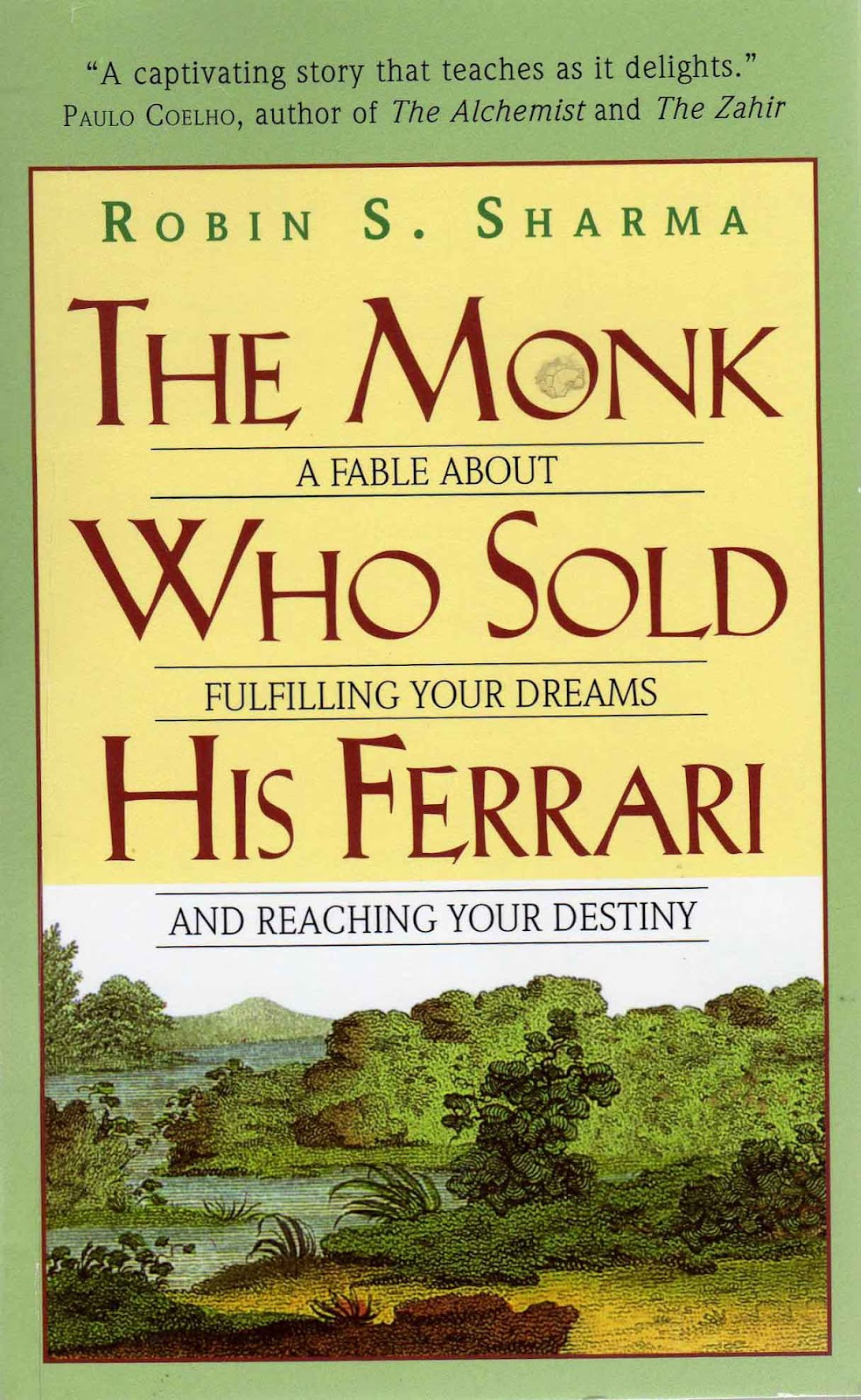
By Sharma Robin
Subject & College
Publish Date
2003-09-25
Published Year
2003
Publisher, Place
Total Pages
198
ISBN 13
9788179921623
Format
Hardcover
Country
India
Language
English
Dimension
23 cm.
Readers Feedback
The Monk Who Sold His Ferrari
Lakshya Vinayak Shivankar (SE MECHANICAL ) RAJGAD DNYANPEETH Shri Chhatrapati Shivajiraje College of Engineering,Dhangawadi Robin Sharma’s "The Monk Who Sold His Ferrari" is a compelling...Read More

Lakshya Vinayak Shivankar
The Monk Who Sold His Ferrari
Lakshya Vinayak Shivankar (SE MECHANICAL ) RAJGAD DNYANPEETH Shri Chhatrapati Shivajiraje College of Engineering,Dhangawadi
Robin Sharma’s “The Monk Who Sold His Ferrari” is a compelling fable that intertwines the themes of personal growth, spirituality, and the pursuit of happiness. Through the journey of Julian Mantle, a successful lawyer who experiences a life-altering crisis, Sharma delivers profound insights on how to live a more fulfilling life.
*Key Points:*
1. *Transformation Through Crisis*: The story begins with Julian Mantle, a high-powered attorney whose life spirals out of control due to stress and burnout. His heart attack serves as a wake-up call, prompting him to reassess his life choices. This pivotal moment emphasizes the idea that sometimes, crises can lead to transformative change.
2. *The Search for Meaning*: Julian’s journey to India introduces readers to the concept of seeking deeper meaning beyond material success. He encounters wise sages who impart valuable lessons about life, happiness, and inner peace. This quest for meaning resonates with anyone feeling unfulfilled in their pursuits.
3. *The Seven Timeless Virtues*: The core of the book revolves around the “Seven Timeless Virtues of Enlightened Living,” which include mastering the mind, following your purpose, practicing discipline, and nurturing relationships. Each virtue is illustrated with practical advice, making them accessible for readers to implement in their own lives.
4. *Mindfulness and Presence*: Sharma emphasizes the importance of living in the present moment. Julian learns that true happiness comes from mindfulness and appreciating life’s simple pleasures. As Sharma writes, “The quality of your life is determined by the quality of your thoughts.”
5. *Legacy and Contribution*: The book encourages readers to think about their legacy and the impact they have on others. Julian’s transformation leads him to understand that true success is measured not by wealth but by the positive influence one has on the world.
*Main Points:*
– *Materialism vs. Spirituality*: The contrast between Julian’s former life of excess and his newfound spiritual awakening serves as a critique of modern society’s obsession with material wealth.
– *Practical Wisdom*: The lessons Julian learns are not just philosophical; they are actionable steps that readers can take to improve their own lives.
– *Inspiration for Change*: Sharma’s narrative is both motivational and practical, encouraging readers to embark on their own journeys of self-discovery.
In conclusion, “The Monk Who Sold His Ferrari” is more than just a self-help book; it is a guide to living a life of purpose and fulfillment. With its engaging storytelling and profound wisdom, Sharma inspires readers to reflect on their own lives and make meaningful changes. As Julian Mantle discovers, “The purpose of life is a life of purpose.” This book is a must-read for anyone seeking to find balance and joy in an increasingly chaotic world.
The Monk Who Sold his Ferrari
Introduction The Monk Who Sold His Ferrari is a self-help book written by Robin Sharma, involving storytelling with life-changing wisdom. The book has become popular...Read More

Esha Deshpande
The Monk Who Sold his Ferrari
Introduction
The Monk Who Sold His Ferrari is a self-help book written by Robin Sharma, involving storytelling with life-changing wisdom. The book has become popular due to its practical approach to personal development and having inspiration within oneself to create balance in life. I picked up this book due to its reputation as a motivational guide, promising various ways for creating a fulfilling and happy life.
________________________________________
Summary
The story revolves around Julian Mantle, a successful lawyer whose determined journey of success leads to a heart attack in the courtroom. Faced with the vulnerability of life, Julian sells his luxurious possessions, which includes his very much-loved Ferrari, and sets out on a spiritual journey to the Himalayas. There, he meets the Spiritual Guides of Sivana, who share the most crucial timeless principles for achieving happiness, health, and inner peace.
Through simple yet profound lessons like mastering the mind, living with purpose, and embracing discipline, Julian transforms his life unexpectedly and returns to share these teachings with others.
________________________________________
Analysis
The book’s strength lies in its simplicity and reliability. Sharma conveys meaningful ideas through engaging metaphors like the “magnificent garden of the mind” and the “sumo wrestler of self-discipline.” These make the concepts easy to grasp and implement in everyday life.
The narrative style, which combines fable-like storytelling with actionable advice, is both captivating and practical. Each chapter ends with specific techniques, such as visualization and goal setting, encouraging readers to take steps toward personal growth.
However, some parts of the book feel repetitive, and certain philosophies might come across as overly idealistic. Despite this, it’s motivational tone and actionable insights compensate for these minor shortcomings.
________________________________________
Personal Opinion
I found The Monk Who Sold His Ferrari to be inspiring and challenging. It reminded me of the importance of self-happiness, self-care, mindfulness, and prioritizing what truly matters. While some ideas seemed simplistic, they were a good reminder to pause and reflect on my life. I’d recommend this book to anyone seeking to reset their priorities and rediscover their purpose.
________________________________________
Conclusion
Overall, The Monk Who Sold His Ferrari is a must-read for individuals looking to achieve personal growth and inner peace. It’s a mixture of storytelling and wisdom which makes it a compelling and a transformative read.
The monk who sold his Ferrari
Book Review : Sonawane Prakash Sanjay, MGV’s Loknete Vyankatrao Hiray Art, Science And Commerce College Panchvati, Nashik. Message that appeals which book holds- Freedom is...Read More

Sonawane Prakash Sanjay
The monk who sold his Ferrari
Book Review : Sonawane Prakash Sanjay, MGV’s Loknete Vyankatrao Hiray Art, Science And Commerce College Panchvati, Nashik.
Message that appeals which book holds- Freedom is like a house: you build it brick by brick.
Readership- It has sold more than three million copies as of 2013.
Cover and illustrations- Cover consists of “Red Ferrari Car” with an illustration on it as “Everything is created twice, first in the mind and then in the reality.”
Plot- The Monk Who Sold His Ferrari is the tale of Julian Mantle, a famously sought-after litigator who became a Monk. After a heart attack, his high flying career was put to a stop when he was representing the case. He had two options left—ending his career or ending his life.
Fortunately, he preferred the former, sold everything he owned, and went on a trip east to find the secret of happiness. He experienced teachers and sages who assisted, but his hunger for wisdom could not be fulfilled until he was referred to the Sages who lived high up in the Sivana Mountains, far from all culture and corruption. There he discovered the eternal ideals of enlightened life, under the tutelage of Yogi Raman and others.
To foster memorability and practicality, these values were taught using an age-long fable of metaphors (The glorious garden; The soaring lighthouse; The Sumo wrestler; The pink wire cable; The Gold stopwatch; The fragrant Roses; The diamond path). After three years of looking 10 years younger, more lively, enthusiastic, and smarter, Julian Mantle came back from the mountains. He searched out his former mate, John, and shared with him the secrets he had acquired from the mountains, with a charge to pass on the information to as many as he wished to hear.
Characters- The novel evolves, in the form of dialogue, around two people, Julian Mantle and his best friend John. During a Himalayan journey which he undertook after selling his holiday home and red Ferrari, Julian narrates his spiritual experiences.
Insight into some interesting incidents- “The Universe favours the brave.”
“The purpose of a life is a life of purpose.”
“Find out what you truly love to do and direct all of your energy towards doing it. Once you do this, abundance flows into your life, and all your desires are filled with ease and grace.”
Note: The book evolves, in the form of dialogue, around two people, Julian Mantle and his best friend John. During a Himalayan journey which he undertook after selling his holiday home and red Ferrari, Julian narrates his spiritual experiences.
The Monk Who Sold His Ferrari
About the Author Robin Sharma, a former litigation lawyer, is an internationally renowned leadership expert and motivational speaker. He is best known for his expertise...Read More

Amolik Rahul Michael
The Monk Who Sold His Ferrari
About the Author
Robin Sharma, a former litigation lawyer, is an internationally renowned
leadership expert and motivational speaker. He is best known for his
expertise in personal mastery and life transformation. Through his books,
including *The Monk Who Sold His Ferrari*, Sharma inspires readers to
live a purposeful and fulfilling life.
About the Book
*The Monk Who Sold His Ferrari* is a motivational fable that combines
self-help advice with an engaging story. It follows the transformative
journey of Julian Mantle, a successful lawyer who, after experiencing a
life crisis, leaves his career to seek enlightenment in the Himalayas. The
book imparts valuable life lessons, focusing on achieving balance, joy,
and purpose.
About the Plot
The story revolves around Julian Mantle, a high-powered lawyer who
suffers a heart attack due to his stressful lifestyle. This incident prompts
him to sell his luxurious possessions, including his Ferrari, and embark
on a spiritual journey to the Himalayas. There, he learns profound life
principles from monks in the Sivana community. Upon returning, Julian
shares these teachings with his friend, offering practical steps to live a
fulfilling and meaningful life.
About the Characterisation
The central character, Julian Mantle, represents the struggles many face
in modern life—burnout, dissatisfaction, and lack of purpose. His
transformation from a materialistic lawyer to a spiritually enlightened
mentor is inspiring. The monks of Sivana, though not deeply explored as
individual characters, symbolize wisdom and simplicity, serving as a
counterpoint to Julian's earlier life.
About the Themes
The book explores themes of:
– **Self-Discipline and Personal Growth**: Emphasizing the importance
of consistent effort in achieving one’s goals.
– **Mindfulness and Inner Peace**: Advocating for living in the present
moment and finding joy in simplicity.
– **Life Purpose**: Encouraging readers to identify their life’s mission
and work toward it.
– **Balance Between Success and Happiness**: Highlighting the need to
align external achievements with inner fulfillment.
About Overall Analysis
The book’s fable-like narrative makes profound concepts accessible and
relatable. Sharma’s writing is simple yet impactful, providing actionable
steps for readers to apply in their own lives. While the story serves as a
vehicle for the lessons, the dialogue can sometimes feel overly didactic.
However, the powerful life principles compensate for any narrative
weaknesses.
Your Opinion
The book is a must-read for anyone seeking clarity, direction, and
balance in life. Its timeless wisdom is relevant for people across all walks
of life, especially those feeling overwhelmed by modern challenges.
Compare with Similar Works
The book shares similarities with *The Alchemist* by Paulo Coelho in
its allegorical storytelling and focus on self-discovery. However, *The
Monk Who Sold His Ferrari* is more direct in providing actionable
advice, making it a practical guide compared to the poetic style of
Coelho’s work.
Appreciation/ Critique
Sharma’s ability to distill complex spiritual wisdom into simple,
actionable steps is commendable. However, the narrative occasionally
feels secondary to the lessons, making it less engaging as a story.
Overall, it is an inspiring and thought-provoking book that has positively
impacted millions of readers worldwide.
The Monk Who Sold his Ferrari
Introduction The Monk Who Sold His Ferrari is a self-help book written by Robin Sharma, involving storytelling with life-changing wisdom. The book has become popular...Read More
Esha Deshpande
The Monk Who Sold his Ferrari
Introduction
The Monk Who Sold His Ferrari is a self-help book written by Robin Sharma, involving storytelling with life-changing wisdom. The book has become popular due to its practical approach to personal development and having inspiration within oneself to create balance in life. I picked up this book due to its reputation as a motivational guide, promising various ways for creating a fulfilling and happy life.
________________________________________
Summary
The story revolves around Julian Mantle, a successful lawyer whose determined journey of success leads to a heart attack in the courtroom. Faced with the vulnerability of life, Julian sells his luxurious possessions, which includes his very much-loved Ferrari, and sets out on a spiritual journey to the Himalayas. There, he meets the Spiritual Guides of Sivana, who share the most crucial timeless principles for achieving happiness, health, and inner peace.
Through simple yet profound lessons like mastering the mind, living with purpose, and embracing discipline, Julian transforms his life unexpectedly and returns to share these teachings with others.
________________________________________
Analysis
The book’s strength lies in its simplicity and reliability. Sharma conveys meaningful ideas through engaging metaphors like the “magnificent garden of the mind” and the “sumo wrestler of self-discipline.” These make the concepts easy to grasp and implement in everyday life.
The narrative style, which combines fable-like storytelling with actionable advice, is both captivating and practical. Each chapter ends with specific techniques, such as visualization and goal setting, encouraging readers to take steps toward personal growth.
However, some parts of the book feel repetitive, and certain philosophies might come across as overly idealistic. Despite this, it’s motivational tone and actionable insights compensate for these minor shortcomings.
________________________________________
Personal Opinion
I found The Monk Who Sold His Ferrari to be inspiring and challenging. It reminded me of the importance of self-happiness, self-care, mindfulness, and prioritizing what truly matters. While some ideas seemed simplistic, they were a good reminder to pause and reflect on my life. I’d recommend this book to anyone seeking to reset their priorities and rediscover their purpose.
________________________________________
Conclusion
Overall, The Monk Who Sold His Ferrari is a must-read for individuals looking to achieve personal growth and inner peace. It’s a mixture of storytelling and wisdom which makes it a compelling and a transformative read.
The Monk Who Sold His Ferrari : a fable about fulfilling your dreams and reaching your destiny
Supriya S. Jadhav JKRC, Savitribai Phule Pune University “The Monk Who Sold His Ferrari” is more than just a self-help book; it is a philosophical...Read More

Supriya Jadhav
The Monk Who Sold His Ferrari : a fable about fulfilling your dreams and reaching your destiny
Supriya S. Jadhav
JKRC, Savitribai Phule Pune University
“The Monk Who Sold His Ferrari” is more than just a self-help book; it is a philosophical lessons on living a life of purpose and joy. The author Robin Sharma is rich with narration of metaphors and allegories, making the lessons accessible and relatable. The book’s fable like structure allows readers to immerse themselves in Julian’s journey and internalize the wisdom he gains.
One of the strengths of the book is its simplicity. Robin Sharma simplifies complex philosophical concepts into practical and actionable steps that readers can easily incorporate into their daily lives. The book’s language is straightforward and engaging, making it an enjoyable to read for individuals of all ages and backgrounds. Moreover, the book talks about timeless wisdom which resonates with readers on a deep, personal level. The principles outlined in the book are universally applicable, transcending cultural and societal boundaries. Whoever is seeking professional success, personal happiness, or spiritual enlightenment, the lessons in this book provides valuable guidance.
Storyline revolves around a life of Julian Mantle, who is a high-powered, successful lawyer whose life is a roller coaster of stress and material excess. One day, he suffers a severe heart attack in the courtroom, that day becomes the turning point of his life. Realizing the emptiness and lack of true joy in his opulent lifestyle, Julian decides to sell his beloved Ferrari and embark on a spiritual quest to find deeper meaning and happiness, the turning point in Julian’s life leads him to the Himalayas, where he meets the Sages of Sivana, a group of enlightened monks who impart him to ancient wisdom and timeless principles for leading a fulfilling life. The teachings he receives are encapsulated in seven virtues, each of which is essential for achieving inner peace and lasting happiness.
1. Master Your Mind : Julian learns that mastering the mind is the foundation for personal transformation., this book emphasizes the importance of maintaining a positive mindset and practicing mindfulness. By consciously controlling one’s thoughts and focusing on positive outcomes, individuals can cultivate a sense of inner calm and clarity.
2. Follow Your Purpose : The Sages Julian met teaches the significance of having a clear purpose in life. By identifying and pursuing one’s true calling, individuals can lead lives filled with passion and meaning. The book encourages readers to set clear goals and take proactive steps toward realizing their dreams.
3. Practice Kaizen : Kaizen, a Japanese term meaning continuous improvement, is one of the core principles Julian learns. The book advocates for the constant pursuit of self-improvement and growth. By committing to lifelong learning and challenging oneself, individuals can achieve excellence in all aspects of life.
4. Live with Discipline : Discipline is portrayed as a crucial virtue for personal success. Julian learns that self-discipline involves making small, consistent efforts to develop good habits and eliminate bad ones. By exercising self-control and staying committed to goals, individuals can build a strong foundation for success.
5. Respect Your Time : Time management is another vital lesson imparted to Julian. The book highlights the importance of valuing one’s time and using it wisely. By prioritizing tasks, setting boundaries, and avoiding procrastination, one can make the most of their time and lead productive lives.
6. Selflessly Serve Others : The Sages emphasize the importance of serving others as a pathway to true fulfilment. Julian learns that by helping others and contributing to their well-being, anyone can experience a sense of joy and satisfaction that transcends material wealth.
7. Embrace the Present : Finally, Julian is taught the value of living in the present moment. The book encourages readers to savor the beauty of each moment and cultivate gratitude for life’s simple pleasures. By being fully present, in the moment one can experience a deeper connection to themselves and the world around them.
In conclusion, “The Monk Who Sold His Ferrari” is a powerful and inspiring book that offers valuable lessons for leading a balanced and meaningful life. Robin Sharma’s engaging narrative and practical wisdom make it a must-read for anyone seeking to improve their lives and find true happiness. The book’s timeless principles serve as a guiding light for personal transformation and fulfilment, encouraging readers to embark on their own journey of self-discovery and growth.